Attic cleanup and rodent proofing in San Diego, CA means removing contaminated insulation, eliminating every trace of biological waste with HEPA-grade equipment, sealing every entry point rodents used, and installing fresh insulation so your home is clean, sealed, and energy-efficient again. Clean Air Attic Insulation is an insulation contractor serving San Diego and surrounding communities — including Chula Vista, National City, La Mesa, Bonita, and Coronado — that handles every step of this process under one roof, from the first inspection to the finished attic.
San Diego's mild, dry climate does not eliminate the rodent threat — it makes it year-round. Roof rats and Norway rats thrive in the region's warm winters, and the area's large inventory of older stucco and wood-frame homes built before tighter building envelopes became standard gives rodents dozens of common entry paths. If you can hear scratching at night or smell a musty odor from your ceiling, the sections below explain exactly what to do and what to expect.
Read moreShow less
⚠ 24/7 Emergency Rodent Service — Call (858) 360-6973 Any Time
Active infestation? We offer around-the-clock emergency service for homeowners in San Diego and the surrounding areas. Do not wait — rodent damage compounds every day activity continues in the attic.
What does attic cleanup and rodent proofing include in San Diego?
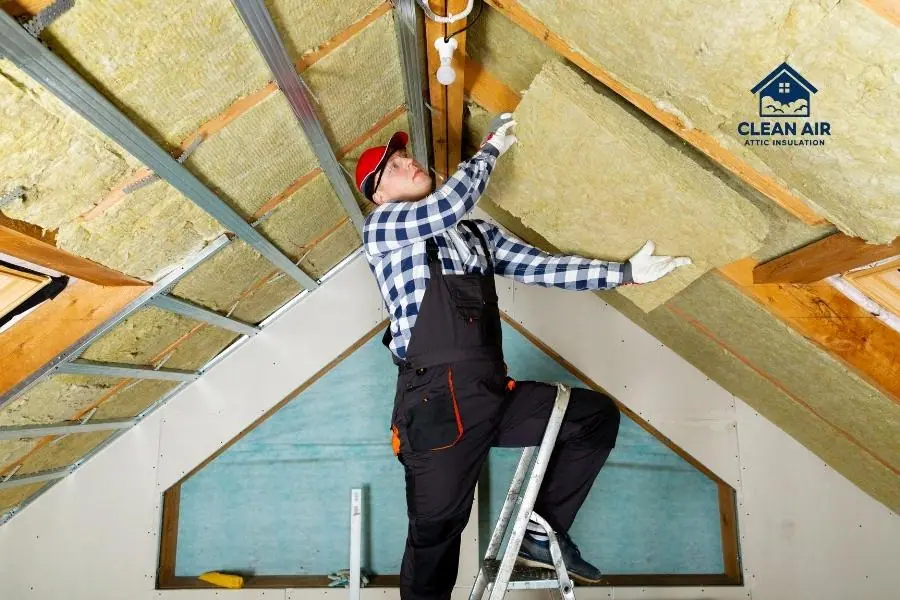
A complete attic cleanup and rodent-proofing project covers five core scopes: full removal of contaminated insulation, HEPA vacuuming of all surfaces, antimicrobial sanitation, physical exclusion of every entry point, and installation of new insulation. Each scope must be completed in that order — skipping or reordering steps is the most common reason infestations return.
In San Diego specifically, trained technicians also inspect ductwork and attic HVAC components. Roof rats frequently nest on or inside flex ducts, and degraded duct insulation is easy to miss without a methodical inspection. Our duct insulation page explains how we assess and restore this often-overlooked part of the system. We document the entire attic with photos before and after the work so you have a clear record — useful for insurance claims and for verifying that exclusion is complete before new insulation goes in.
Read moreShow less
Attic sanitation goes beyond sweeping up droppings, and our full range of services shows how each stage fits together. Rodent urine soaks into batt insulation and can persist for months, carrying pathogens like hantavirus. HEPA-grade vacuums capture particles down to 0.3 microns, preventing contaminated dust from recirculating through the home during removal. Antimicrobial fogging then treats the structural wood, joists, and sheathing that the vacuum cannot reach.
Understanding how common rodent intrusions are in this region helps explain why a thorough process — not a quick spray-and-trap visit — is the right response.
How common is it to have rats in your attic?
Roof rat infestations are extremely common in San Diego County — arguably more so than in most U.S. cities — because the region's subtropical climate, mature tree canopy, and abundance of citrus and avocado trees provide ideal food and harborage year-round. Roof rats (Rattus rattus) are agile climbers that reach attics via tree branches, utility lines, and roofline gaps as small as half an inch.
Neighborhoods throughout San Diego — including older areas of Spring Valley, La Presa, and Lemon Grove — have housing stock where eave gaps, deteriorated fascia, and unsealed pipe penetrations are routine findings during our inspections, and closing those gaps is where air sealing works alongside rodent exclusion. The absence of a hard winter freeze means a rodent colony that gets established in autumn does not die off; it grows through the following spring.
Read moreShow less
Many homeowners discover an infestation only when noise becomes impossible to ignore or when an HVAC service technician spots evidence in the attic. By that point, insulation is usually heavily contaminated. Knowing how long rats can persist in an attic without intervention helps set realistic expectations for the cleanup ahead.

Free, no-obligation estimates
Talk to Clean Air Attic Insulation
Tell us what you need and we’ll take it from there.
How long will rats stay in the attic?
Rats will stay in an attic indefinitely as long as three conditions are met: a way in, a food source nearby, and nesting material. Without active intervention — exclusion, removal of nesting sites, and elimination of food attractants outside — a colony does not leave on its own.
Roof rats reproduce rapidly: a female can produce four to six litters per year with six to eight pups per litter under favorable conditions. A pair that enters in October can represent dozens of individuals by spring. Each additional week of activity means more droppings, more urine saturation in the insulation, and a higher probability of gnawed wiring or duct damage.
This is why we treat active infestations as time-sensitive. The sooner exclusion is completed, the less attic restoration material must be removed and replaced. The next section explains the right sequence for getting rid of rodents before cleanup begins.
How to get rid of a rodent in your attic?
Getting rid of rodents in the attic requires physical exclusion — permanently sealing every entry point — combined with population reduction before the attic is cleaned. Exclusion without population reduction traps live animals inside; cleanup without exclusion allows new animals to re-enter and re-contaminate fresh insulation.
- Inspection: A trained technician inspects the full roofline, eaves, soffits, gable vents, pipe penetrations, and foundation for entry points and grades the severity of the infestation.
- Population reduction: Snap traps placed inside the attic before sealing eliminate animals already inside. Bait stations may be placed at the perimeter as an additional control measure.
- Exclusion (sealing): Entry points are sealed with galvanized steel mesh, expanding foam rated for rodent resistance, sheet metal flashing, or hardware cloth — durable materials that rodents cannot chew through.
- Contaminated insulation removal: All insulation in contact with droppings, urine, or nesting material is bagged and removed.
- HEPA vacuum and sanitation: Every exposed surface is vacuumed with HEPA equipment, then treated with an EPA-registered antimicrobial agent.
- New insulation installation: Fresh blown-in or batt insulation is installed to current California Title 24 R-value requirements, restoring thermal performance.
Read moreShow less
A practical decision rule: if you can hear active movement at night, population reduction must come before sealing. Sealing first without trapping is the single most common DIY mistake. Once the attic is quiet and all traps are clear, exclusion sealing can be verified and new insulation installed.
Beyond that process, some homeowners ask whether certain scents or sounds can deter rodents — the next section addresses that honestly.

What do rats hate most at night?
Rats are deterred most reliably by physical barriers — specifically, materials they cannot chew through — not by scents, sounds, or lights. Electronic ultrasonic repellers, peppermint oil, and mothballs are frequently marketed as deterrents, but no peer-reviewed evidence supports their effectiveness for established indoor infestations. Rats habituate to novel stimuli quickly.
What rats genuinely avoid are steel mesh, sheet metal, and hardened concrete — materials that resist gnawing. A half-inch opening behind a fascia board covered with 19-gauge galvanized hardware cloth will stop a roof rat; a plug of steel wool alone will not, because steel wool compresses and rusts, eventually creating a gap. This is why the material specification in the exclusion step matters as much as finding the entry point itself.
Read moreShow less
At night, rats are most active, which is also when most homeowners first notice the problem. If scratching or running sounds are present, it confirms active infestation and the need for professional inspection rather than DIY deterrents. Our full attic cleanup and rodent-proofing process addresses the underlying conditions rather than surface symptoms.
How does our attic cleanup and rodent-proofing process work?
In San Diego, our attic cleanup and rodent-proofing process runs in five documented stages, and in straightforward cases the full scope can be completed in a single day.
- Free inspection and documentation: We inspect the attic, photograph all evidence of infestation, identify entry points, assess insulation condition, and check ductwork and electrical for gnaw damage. You receive a written assessment before any work begins.
- Contaminated insulation removal: All affected insulation is vacuumed out using commercial-grade equipment into sealed bags for safe disposal. We do not leave contaminated material in the attic.
- HEPA vacuuming and antimicrobial sanitation: Structural surfaces — joists, sheathing, rafters — are HEPA-vacuumed and treated with an EPA-registered antimicrobial solution. This step addresses pathogens that the insulation removal step alone cannot reach.
- Exclusion sealing: Every identified entry point is sealed with appropriate materials (galvanized mesh, sheet metal, or rodent-resistant foam). We photograph closed penetrations so the exclusion work is verifiable.
- New insulation installation: We install blown-in insulation, batt insulation, or spray foam to meet current California Title 24 standards. R-value and type are matched to your attic geometry and any duct configuration.
Read moreShow less
One detail that matters locally: San Diego's older homes frequently have flat or low-slope roof sections in addition to conventional pitched attics. Flat-roof attic spaces have different access and sealing requirements, and we account for that in both the exclusion plan and the insulation specification. After the job is finished, we walk you through the before-and-after photos so you can see exactly what was found and what was done.
Before & After Photo Gallery
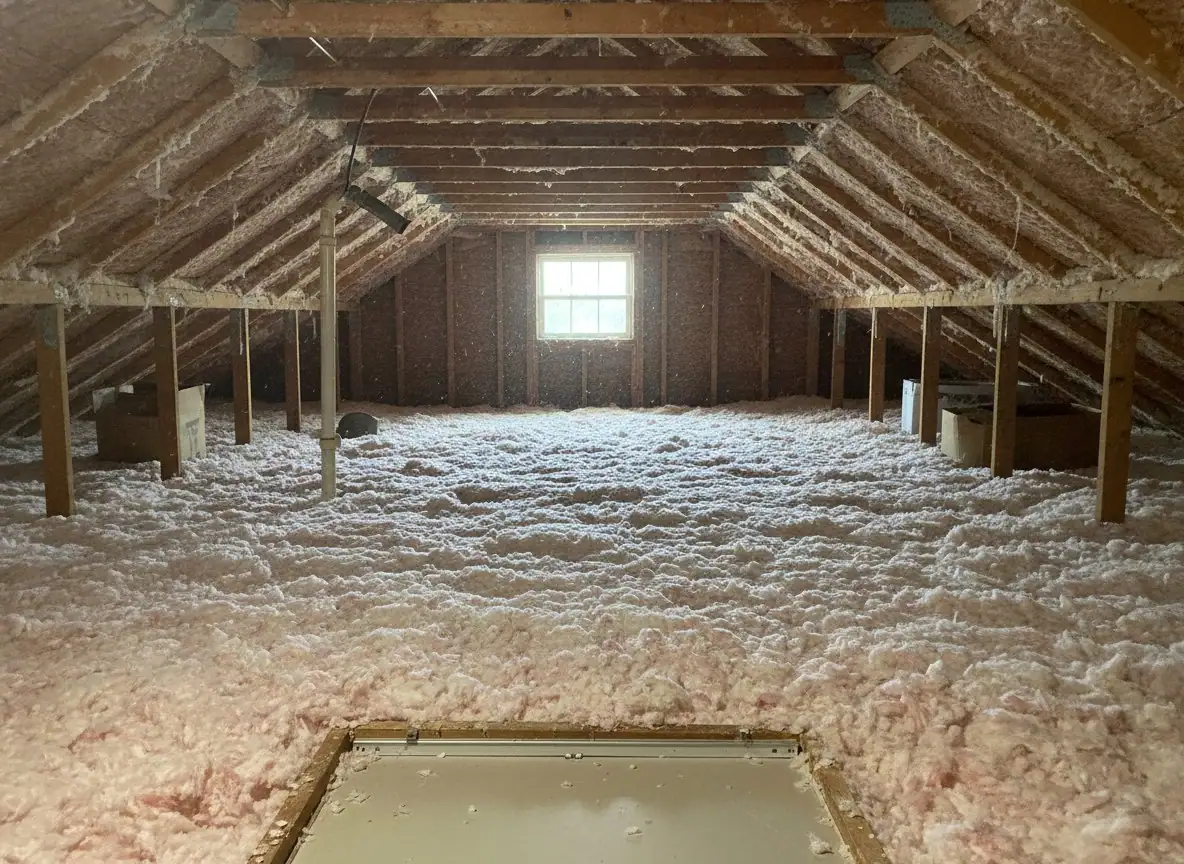
We document every attic cleanup project with photographs taken before removal begins and after insulation installation is complete. Ask our team to show you project examples during your free inspection.
At a glance
How much does it cost to get rid of rodents in the attic in San Diego?
The cost to get rid of rodents in the attic in San Diego depends on several project-specific factors, and no honest estimate can be given without a physical inspection. Industry sources cite a broad general range; the actual cost for your home could fall anywhere within or outside that range depending on the variables below.
| Cost Factor | Why It Affects Price |
|---|---|
| Attic square footage | More area means more removal labor, more sanitation product, and more new insulation material. |
| Severity of contamination | Heavy droppings or urine saturation requires longer sanitation time and may require structural wood treatment. |
| Number and difficulty of entry points | Hard-to-reach penetrations (roofline, eave intersections, plumbing chases) take more time to seal correctly. |
| Duct and HVAC damage | Gnawed flex duct must be replaced before new insulation goes in; this adds material and labor cost. |
| Attic pitch and access | Low-pitch or flat-roof attic sections require different equipment and more time than standard pitched attics. |
| Insulation type selected | Blown-in cellulose, blown-in fiberglass, batt, and spray foam carry different material costs and R-value outcomes. |
| Electrical or structural repairs needed | Gnawed wiring discovered during inspection must be repaired before the attic is closed — this may involve a licensed electrician. |
We provide a written, itemized quote after the free inspection so you know exactly what the project covers and what it will cost before you commit. No work begins without your written approval.
At a glance
How much does it cost to remove insulation from an attic?
Insulation removal cost is driven by the type of insulation in place, the depth, the accessibility of the attic, and whether the material is loose-fill or batt — all factors that determine labor hours and disposal volume.
| Removal Factor | Impact on Cost |
|---|---|
| Insulation type (blown-in vs. batt) | Loose-fill insulation must be vacuumed out with industrial equipment; batt must be hand-removed and bagged. Each method has different labor demands. |
| Depth of existing insulation | Deeper material means more volume to extract and more disposal bags. |
| Attic access and headroom | Tight access hatches or low headroom slow the removal process and increase labor time. |
| Presence of biohazard material | Contaminated insulation requires special handling, sealed transport, and appropriate disposal — this differs from standard tear-out. |
| Partial vs. full removal | Spot removal of heavily contaminated zones costs less than full attic tear-out, but full removal is often necessary when contamination is widespread. |
Because rodent-contaminated insulation is a biohazard, we do not recommend leaving any portion in place if droppings or urine are distributed throughout the attic. Adding new insulation over contaminated material does not eliminate the health risk — a question we address in the FAQ below. Your written quote from Clean Air Attic Insulation will separate removal cost from sanitation and re-insulation costs so you can see each component clearly.
Will insurance help pay for rodent damage and attic cleanup?
Some homeowner insurance policies cover sudden and accidental rodent damage — such as a fire caused by gnawed wiring — but most standard policies exclude gradual damage from pest infestation or the cost of rodent cleanup itself. Whether your policy applies depends on your carrier, your policy language, and how the damage is documented.
Insurance Claim Assistance
We help San Diego homeowners document attic damage with photographs, written assessments, and itemized scopes of work that meet insurance adjuster requirements. If your policy covers any portion of the damage, having professional documentation significantly strengthens your claim. Contact us to discuss your situation before you file.
Key steps that improve claim outcomes: report the damage promptly, do not begin cleanup before the adjuster has documented the loss (or get written permission), and have the contractor's written assessment ready when you file. We coordinate directly with adjusters when homeowners need that support.
Financing is also available for projects not covered by insurance — ask about financing options when you schedule your free inspection.
How do I choose an attic cleanup company and book a free inspection?
Choose an attic cleanup company that completes all five steps — inspection, removal, HEPA sanitation, exclusion, and re-insulation — with the same crew rather than subcontracting any stage, because coordination gaps between separate contractors are where exclusion misses happen. Ask for before-and-after photographs as a standard part of their process, and ask to see a written quote before any work begins.
Practical questions to ask any contractor:
- Do you document entry points with photographs before and after sealing?
- What exclusion materials do you use, and are they rodent-chew-resistant?
- Do you check ductwork for damage during the inspection?
- Can you assist with insurance documentation if the damage may be covered?
- Do you offer financing for projects not covered by insurance?
- Is 24/7 emergency service available if I have an active infestation tonight?
Read moreShow less
Clean Air Attic Insulation, an insulation contractor serving San Diego, CA, offers free inspections for homeowners throughout the service area — including San Ysidro, Otay Mesa, Nestor, Imperial Beach, La Presa, Lemon Grove, and Coronado. Scheduling a free inspection is the right first step whether you have confirmed rodent evidence or only suspect a problem. Call (858) 360-6973 to book yours.
FAQ
FAQ
What are the signs of rodents in my attic?
The most reliable signs of rodents in a San Diego attic are scratching or running noises at night (roof rats are nocturnal), dark dropping clusters near eaves or along joists, a persistent musty or ammonia-like odor, shredded insulation or paper nesting material, and gnaw marks on wood or electrical wiring. A visual checklist:
• Droppings (roof rat droppings are roughly 1/2 inch, pointed at both ends)
• Grease rub marks along rafters or entry-point edges
• Nesting piles of shredded insulation, fabric, or plant material
• Gnawed flex duct or electrical wiring insulation
• Entry holes at the roofline, gable vents, or pipe penetrations
• Footprints or tail drag marks in dusty areas of the attic floor
If you identify two or more of these signs, schedule a professional inspection rather than waiting.
Is rodent droppings in insulation a health risk?
Yes. Rodent droppings and urine in insulation are a recognized health risk. Hantavirus Pulmonary Syndrome, leptospirosis, and salmonellosis are among the illnesses associated with exposure to rodent waste. The risk is highest when contaminated insulation is disturbed and particles become airborne. This is why removal requires HEPA-grade equipment rather than standard shop vacuums, and why the attic should not be entered without proper respiratory protection until professional cleanup is complete.
Can I just add new insulation over contaminated insulation?
No. Adding new insulation over contaminated insulation does not neutralize the pathogens in the existing material, does not eliminate the odor that attracts rodents back, and does not meet California Title 24 or standard professional practice. Contaminated insulation must be removed and the substrate sanitized before insulation replacement puts new insulation in place. Any contractor who recommends covering rather than removing contaminated material should not be hired for this work.
Do you offer 24/7 emergency service for rodent problems?
Yes. We offer 24/7 emergency service for homeowners in San Diego and surrounding communities who have an active infestation or urgent situation. Call (858) 360-6973 any time of day or night to reach our team.
Do you seal entry points so rodents don't return?
Yes. Physical exclusion — permanently sealing every identified entry point with galvanized steel mesh, sheet metal flashing, or rodent-resistant materials — is a required step in every attic cleanup and rodent-proofing project we complete. We photograph each sealed penetration so the exclusion work is documented and verifiable. We do not install new insulation until exclusion is confirmed complete.
Is financing available for attic restoration?
Yes. Financing is available for attic restoration projects, including full attic cleanup, insulation removal, sanitation, exclusion, and re-insulation. Ask about financing options when you call to schedule your free inspection at (858) 360-6973.
Ready to get your attic clean, sealed, and re-insulated? Call Clean Air Attic Insulation at (858) 360-6973 to schedule a free inspection in San Diego, CA and the surrounding service area. We offer 24/7 emergency response for active infestations and can provide a written quote the same day as your inspection.
Why choose us
Why choose Clean Air Attic Insulation?
Free estimates
Get a clear, no-obligation estimate before any work begins.
Licensed & insured
Your property and our crew are protected on every project.
Residential & commercial
One team for homes, multi-family and commercial properties.
Locally owned & operated
A local team serving your community and the surrounding area.
Get in touch
Find insulation help near you
Request a free estimate online or give us a call — our team will follow up quickly.
- Call us(858) 360-6973
- Visit10140 Marconi Dr, San Diego, CA 92154
- HoursMon-Sun 07:00-19:00