

Closed Cell Spray Foam Insulation in San Diego, CA
Energy-Saving Closed Cell Spray Foam Insulation for San Diego, CA Homes — Licensed & Insured
Expert closed cell spray foam insulation in San Diego, CA. Clean Air Attic Insulation serves Chula Vista, Coronado & more. Call (858) 360-6973 for a free quote.
Closed cell spray foam insulation is one of the most advanced and effective insulation solutions available today, delivering superior thermal resistance, moisture control, and structural reinforcement in a single application. Unlike traditional batt or blown-in insulation, closed cell spray foam expands to fill every gap, crack, and cavity before curing into a rigid, dense barrier that resists both heat transfer and water vapor infiltration.
In San Diego, CA, where marine layer humidity along the coast, intense inland heat, and year-round mild temperatures create a unique climate challenge, closed cell spray foam is increasingly the preferred choice for homeowners and commercial property managers alike. The combination of high R-value per inch — typically R-6 to R-7 — and near-perfect air sealing makes it ideally suited for San Diego’s diverse building stock, from mid-century bungalows in North Park to newer construction in Otay Mesa.
At Clean Air Attic Insulation, our team specializes in professional closed cell spray foam installation across the greater San Diego area. Call us at (858) 360-6973 to schedule your assessment today.
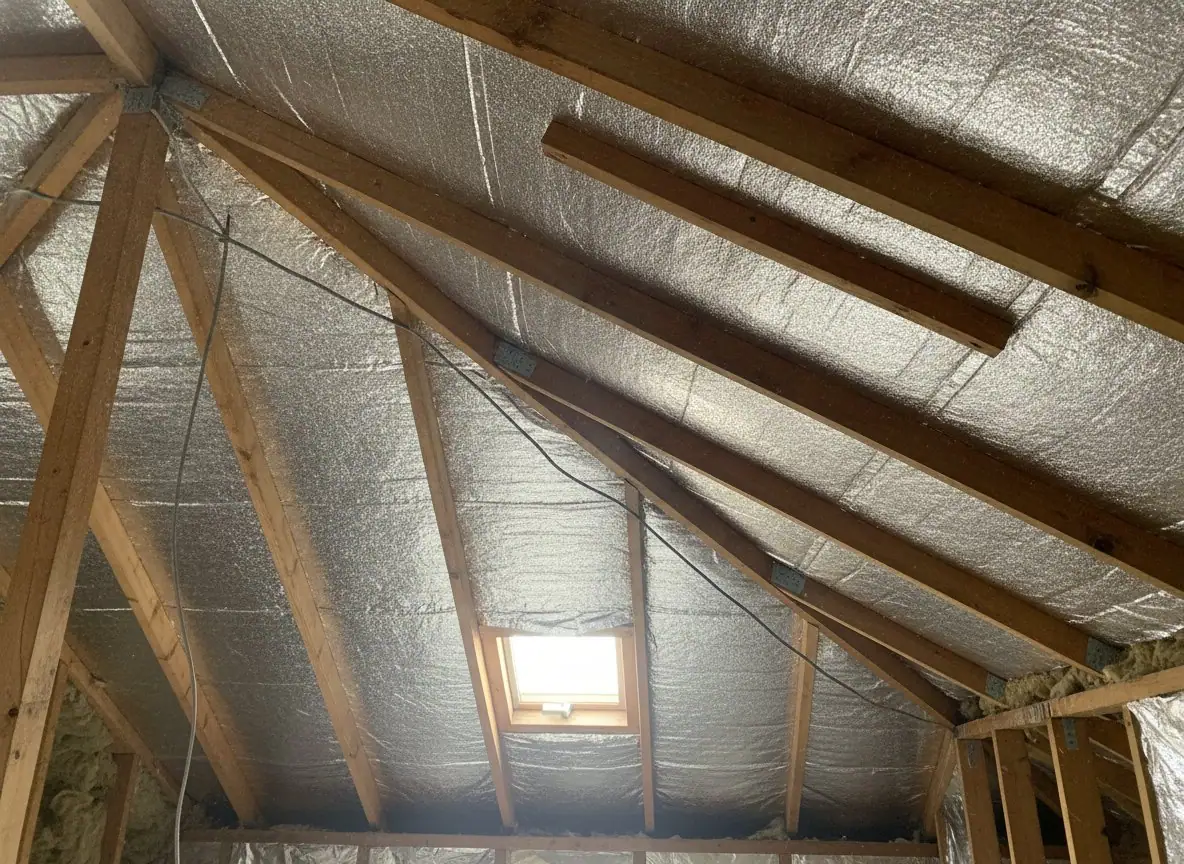
Understanding Closed Cell Spray Foam Insulation
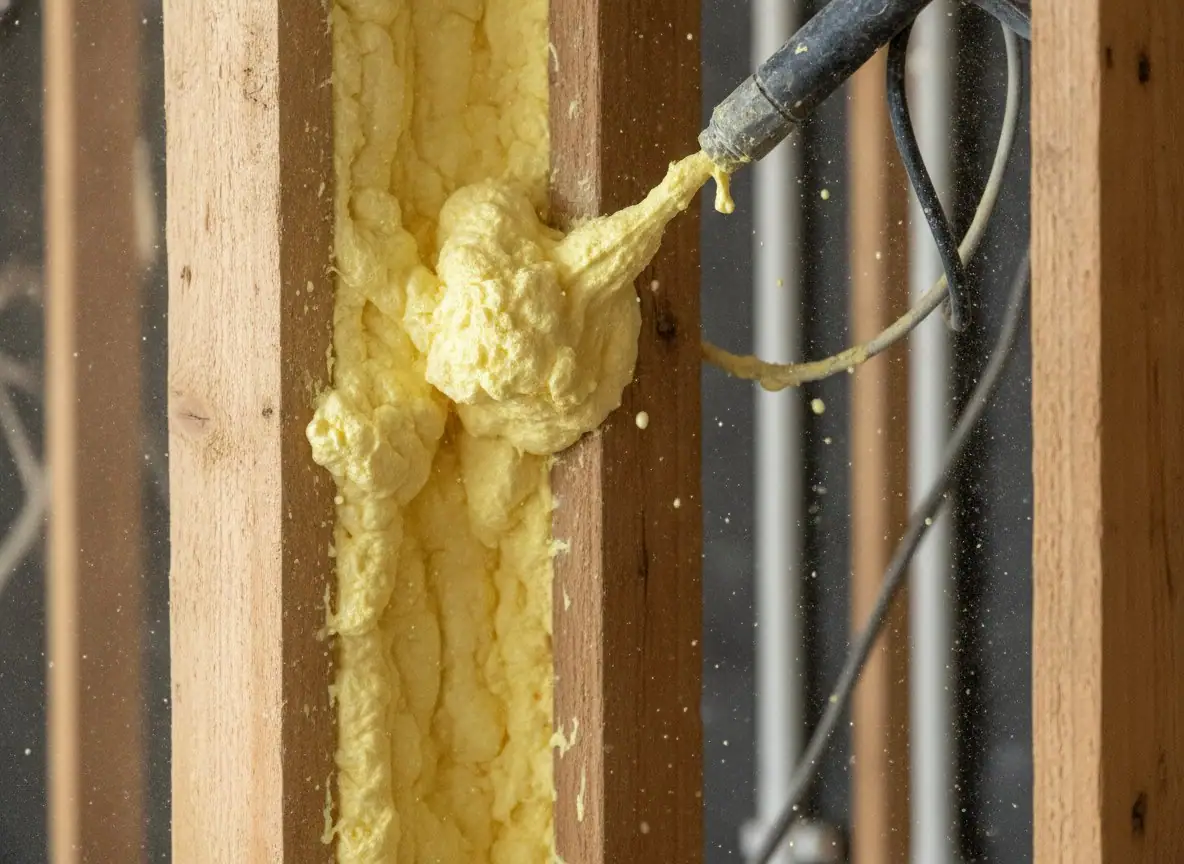
Closed cell spray foam insulation (ccSPF) is a two-component polyurethane foam system that combines isocyanate and polyol resin at the spray gun tip, triggering a rapid chemical reaction. The resulting foam expands approximately 30 to 60 times its liquid volume before curing into a rigid, closed-cell matrix — meaning the individual foam cells are completely encapsulated, preventing air and moisture from passing through.
This closed-cell structure is what distinguishes ccSPF from its open-cell counterpart. Open cell spray foam is softer, more flexible, and vapor-permeable, making it suitable for interior applications where moisture migration is less of a concern. Closed cell foam, by contrast, acts simultaneously as an insulator, an air barrier, a vapor retarder, and a structural reinforcement agent — all in one material.
Read moreShow less
Historical Development and Modern Applications
Spray foam insulation technology evolved from polyurethane chemistry developed during World War II. By the 1980s, commercial spray foam systems had become viable for residential construction, and the EPA’s increasing focus on energy efficiency throughout the 1990s and 2000s drove widespread adoption. Today, closed cell spray foam is specified in building codes across the United States, including California’s stringent Title 24 energy standards, which mandate high-performance building envelopes in new construction and major renovations.
Applicable Building Types in San Diego
San Diego’s housing stock spans multiple eras and architectural styles. Closed cell spray foam is applied effectively across all of them:
- Post-war tract homes (1945–1965): Common in neighborhoods like City Heights and Encanto, these homes often have minimal original insulation and benefit dramatically from ccSPF applied to rim joists, crawl spaces, and attic slopes.
- Mid-century modern construction (1960s–1980s): Flat or low-slope roofs common in Mission Hills and Kensington are ideal candidates for rooftop ccSPF applications that combine insulation and waterproofing.
- Contemporary construction (1990s–present): Newer builds in Otay Mesa and Chula Vista use ccSPF in unvented attic assemblies per California Title 24 compliance requirements.
- Commercial and industrial buildings: Warehouses and light commercial properties throughout the National City and Otay Mesa business corridors commonly use ccSPF for roof deck insulation.
Understanding the specific construction era and building type is essential to selecting the right ccSPF application method — a determination our team makes during every pre-installation assessment. Learn more about our complementary attic insulation services and how they integrate with spray foam applications.
Why Closed Cell Spray Foam Insulation Is Needed in San Diego
The Marine Layer and Coastal Humidity
San Diego’s famous “June Gloom” extends well into July and sometimes August, blanketing coastal neighborhoods from La Jolla south through Imperial Beach with persistent morning fog and relative humidity levels that regularly exceed 85 to 95 percent before noon. Neighborhoods within two miles of the Pacific — including Coronado, Nestor, and the beachside communities of Ocean Beach and Mission Beach — experience chronic vapor drive through walls and attic assemblies. Conventional fiberglass batt insulation absorbs this moisture, loses R-value when wet, and can harbor mold growth within 48 to 72 hours of sustained moisture exposure. Closed cell spray foam’s Class II vapor retarder rating (permeance below 1 perm at 2 inches thickness) creates a physical barrier that prevents this vapor infiltration at the source.
Inland Thermal Extremes
While coastal San Diego remains temperate, inland communities experience dramatic temperature swings. Spring Valley, La Mesa, and Lemon Grove can see summer temperatures exceeding 100°F during Santa Ana wind events — the same neighborhoods may drop to the mid-40s°F on winter nights. The September 2020 and October 2021 Santa Ana events brought prolonged heat spikes that drove air conditioning loads to historic highs across eastern San Diego County. Homes in these areas with inadequate attic insulation saw interior temperatures rise 15 to 20°F above set points, forcing HVAC systems into continuous-run cycles and generating energy bills that doubled or tripled monthly averages. Closed cell foam’s R-6.5 per inch rating — compared to R-2.2 per inch for standard fiberglass batts — means that even a 3-inch application in a shallow attic delivers R-19.5, meeting or exceeding California Title 24 minimums for Climate Zone 10.
Seismic Activity and Structural Considerations
San Diego sits near the Rose Canyon Fault system, which runs through Mission Valley and has generated significant seismic events historically. The 1986 Oceanside earthquake (magnitude 5.3) and the 1991 Sierra Madre earthquake demonstrated how even moderate seismic activity stresses building connections and expands existing air gaps in older construction. Studies by the Lawrence Berkeley National Laboratory have shown that closed cell spray foam applied to rim joists and crawl space walls can add measurable racking resistance — improving a structure’s response to lateral loads. This dual benefit of insulation and structural reinforcement is particularly relevant for pre-1980s construction in older San Diego neighborhoods like Barrio Logan, Golden Hill, and South Park, where seismic retrofitting is an active priority.
Pest Infiltration Pathways
San Diego County’s warm climate supports aggressive termite activity year-round. Western drywood termites (Incisitermes minor) and subterranean termites (Reticulitermes hesperus) exploit gaps in building envelopes that also serve as air and moisture infiltration points. Closed cell spray foam’s expansion into irregular cavities seals these entry points physically, complementing — though not replacing — professional termite treatment. This is especially relevant for homes in Bonita, National City, and Chula Vista where older wood-frame construction is prevalent and termite pressure is consistently high.
Free, no-obligation estimates
Talk to Clean Air Attic Insulation
Tell us what you need and we’ll take it from there.
Signs You Need Closed Cell Spray Foam Insulation in San Diego
Energy Performance Indicators
- Monthly SDG&E bills that are 20 percent or more above the neighborhood average for comparable square footage
- HVAC system running continuously during summer heat events without reaching set-point temperatures
- Noticeable temperature differences of 5°F or more between rooms on the same floor
- Drafts near electrical outlets, baseboards, or attic access hatches — even with windows and doors closed
Moisture and Air Quality Indicators
- Condensation forming on interior wall surfaces or window frames during marine layer mornings
- Musty odors in attic or crawl space areas, particularly after winter rains
- Visible mold or mildew staining on attic sheathing, floor joists, or crawl space walls
- Elevated indoor humidity readings (above 55 percent RH) during coastal fog seasons
Structural and Visual Indicators
- Existing fiberglass batt insulation that is discolored, compressed, or falling from joists
- Visible daylight or pest entry evidence around rim joists or crawl space vents
- Attic insulation with R-value below R-30 confirmed by a thermal assessment or inspection report
If you recognize two or more of these signs, a professional assessment is strongly recommended. Our team provides thorough inspections that identify the specific infiltration points and insulation deficiencies affecting your property. We also offer professional insulation removal to address existing damaged insulation before new foam is applied.
Our process
Our Closed Cell Spray Foam Insulation Process in San Diego
Every closed cell spray foam project completed by Clean Air Attic Insulation follows a structured, quality-controlled process designed to maximize performance and minimize disruption to your home or business.
- 01
Initial Assessment and Blower Door Evaluation (1–2 Hours)
Our certified technician visits your property to conduct a visual inspection of all potential application areas — attic, crawl space, rim joists, and exterior wall cavities. Where applicable, we use a blower door test to quantify air changes per hour (ACH) and
- 02
Detailed Proposal and Material Selection (24–48 Hours)
Based on assessment findings, we prepare a detailed written proposal specifying foam thickness, target R-value, and total project cost. We specify the appropriate closed cell foam formulation — standard 2-lb density for most applications, or a specialized low-
- 03
Site Preparation (2–4 Hours on Project Day)
Before any foam is applied, we protect all adjacent surfaces, mechanical equipment, and HVAC ductwork with plastic sheeting and masking tape. Combustion appliances in the spray zone are secured per OSHA and California OSHA (Cal/OSHA) protocols. Existing damage
- 04
Spray Foam Application (3–8 Hours Depending on Scope)
Our trained applicators apply closed cell foam in lifts of 1 to 2 inches, allowing each pass to cure before the next is applied. This prevents heat of reaction buildup, which can cause foam delamination. Application temperatures are monitored — San Diego’s coa
- 05
Cure Time and Air Clearance (1–24 Hours)
Closed cell foam reaches tack-free cure within minutes and full mechanical cure within 24 hours. Per California occupancy guidelines, treated areas require ventilation before re-occupancy. We provide clear re-entry timelines at project start.
- 06
Post-Installation Inspection and Thermal Verification
We conduct a final walkthrough using an infrared camera to confirm complete coverage and identify any gaps or thin spots requiring touch-up. This thermal verification step is our quality assurance standard on every project.
- 07
Documentation and Rebate Support
We provide a written installation report suitable for SDG&E Energy Upgrade California rebate applications and California Title 24 compliance documentation.
Closed Cell Spray Foam Methods and Approaches
Unvented Attic Assembly (Hot Roof Application)
California Title 24 and the 2022 California Residential Code permit unvented attic assemblies when closed cell spray foam is applied directly to the underside of the roof deck to a minimum thickness achieving the required R-value for the applicable climate zone. This approach is ideal for San Diego homes in Climate Zone 10 (inland communities like Spring Valley and La Mesa) requiring R-38 total attic insulation. By bringing the attic into conditioned space, duct leakage losses from HVAC systems located in the attic are eliminated — a significant efficiency gain given that San Diego homes commonly lose 20 to 30 percent of conditioned air through leaky attic ductwork.
Crawl Space Encapsulation with Spray Foam
For homes in Bonita, Lemon Grove, and La Presa with raised-foundation crawl spaces, closed cell spray foam applied to the crawl space walls and rim joists creates a fully encapsulated, conditioned crawl space. This approach is combined with our crawl space encapsulation service for comprehensive moisture control. It is particularly effective in areas where seasonal rains drive ground moisture into crawl spaces between November and March.
Rim Joist and Band Joist Sealing
Rim joists — the perimeter framing at floor level — are among the most significant air leakage points in older San Diego homes. A 2-inch closed cell foam application to rim joists delivers R-13 and seals the junction between foundation and framing completely. This targeted approach is often the highest-return investment for homes in National City and Chula Vista where full attic replacement is not yet warranted.
Cavity Fill for New Construction and Major Renovations
During framing stage, closed cell foam can be sprayed into wall cavities to achieve code-compliant R-values within the slimmer framing dimensions common in San Diego infill construction. This is especially relevant in dense urban neighborhoods like North Park and Hillcrest where lot constraints limit wall thickness.
Hybrid Insulation Systems
In some applications, we combine a 2-inch closed cell foam layer (for air sealing and vapor control) with a blown-in fiberglass or cellulose topping layer to reach target R-values cost-effectively. See our blow-in insulation services for details on this complementary approach.
Closed Cell Spray Foam Insulation Cost in San Diego
Understanding the investment required for closed cell spray foam insulation in San Diego helps homeowners plan effectively and evaluate proposals accurately. Pricing reflects material costs, labor, equipment, and project complexity.
Typical Price Ranges
- Rim joist sealing only: $800–$2,500 for a typical single-family home, depending on linear footage and access difficulty
- Crawl space walls and rim joists (encapsulation-ready prep): $2,500–$6,000 for an average 800–1,200 sq ft crawl space footprint
- Unvented attic assembly (spray to roof deck): $4,500–$12,000+ depending on attic square footage, pitch complexity, and target R-value
- Full wall cavity fill (new construction): $1.50–$3.00 per board foot, with a typical 1,500 sq ft home requiring 15,000–20,000 board feet for full coverage
Read moreShow less
Cost Factors Specific to San Diego
Several local factors influence final pricing:
- California Title 24 compliance documentation: Required for permitted work, adds modest administrative cost but supports SDG&E rebate eligibility
- Asbestos or existing insulation removal: San Diego homes built before 1980 may contain asbestos-contaminated vermiculite or deteriorated fiberglass requiring certified removal before foam application — typically $1,500–$4,000 additional
- Attic access and configuration: Low-pitch roofs common in mid-century construction in Mission Hills add labor time and cost
- Material costs: California’s HFC regulations and supply chain dynamics make foam component pricing approximately 8–12 percent higher than national averages
Available Rebates and Financing
SDG&E’s Energy Upgrade California program offers rebates of $0.15–$0.25 per square foot for qualifying insulation improvements. The federal 25C Energy Efficient Home Improvement Tax Credit provides a 30 percent tax credit (up to $1,200 annually) for insulation improvements meeting IRS energy efficiency standards. We provide all required documentation to support these applications. Call (858) 360-6973 for a free, itemized estimate.
San Diego Neighborhoods We Serve
Chula Vista and Otay Mesa
The rapidly growing communities of Chula Vista and Otay Mesa include housing stock ranging from 1960s ranch-style homes to newly constructed master-planned developments. Older homes in western Chula Vista frequently present with original fiberglass batt insulation compressed to below R-10 effective value. New construction in Otay Mesa East increasingly specifies unvented attic assemblies requiring ccSPF under Title 24 compliance.
National City and Lemon Grove
These established communities feature dense concentrations of pre-1970 wood-frame bungalows and duplexes with raised foundations. Crawl space moisture issues are prevalent, and rim joist air leakage is a primary driver of high SDG&E bills. Our crawl space insulation service is frequently combined with ccSPF rim joist sealing in these neighborhoods.
Bonita and Spring Valley
Set further inland, Bonita and Spring Valley experience the full range of San Diego’s thermal extremes. Homes here benefit most from unvented attic spray foam applications that reduce cooling loads during summer Santa Ana events. Many properties also have significant subterranean termite pressure, making thorough air sealing a priority.
Coronado and Imperial Beach
Coastal communities facing the highest marine layer humidity exposure. Vapor-drive through aging wall assemblies and attic sheathing is the primary insulation concern. Closed cell foam’s Class II vapor retarder properties make it the technically correct choice for these environments.
We also serve San Ysidro, Palm City, Egger Highlands, Otay Mesa West, Nestor, La Mesa, La Presa, and the broader San Diego metro area.
Maintenance Tips for Closed Cell Spray Foam Insulation in San Diego
Closed cell spray foam is a durable, long-lasting material, but proper maintenance of surrounding systems ensures your investment performs at peak efficiency throughout San Diego’s demanding climate cycles.
- Annual attic inspection (October–November): Before San Diego’s rainy season begins, inspect attic areas for any roof penetrations or new gaps that could allow moisture intrusion above the foam layer.
- Roof maintenance: Closed cell foam applied to the roof deck does not replace roofing maintenance. Inspect and reseal roof penetrations, vents, and flashing annually — especially after Santa Ana wind events that can dislodge flashing.
- Monitor crawl space moisture levels: Even with encapsulated crawl spaces, check moisture readings annually after the February–March peak rain season. Target relative humidity below 55 percent at floor level.
- Protect foam from UV exposure: If any ccSPF is exposed in unconditioned spaces, ensure it remains coated with an intumescent or UV-protective coating, as uncoated foam degrades with prolonged sunlight exposure.
- HVAC filter maintenance: With improved air sealing, indoor air quality becomes more dependent on HVAC filtration. Change filters every 60–90 days, more frequently during San Diego wildfire smoke events in fall.
- Re-inspection after seismic events: Following any earthquake of magnitude 4.0 or greater on the Rose Canyon or Elsinore fault systems, have a technician verify foam integrity at structural junctions.
- Do not penetrate foam without professional assessment: Additions, new electrical work, or plumbing modifications should be coordinated with our team to maintain air sealing integrity.
Why Choose Clean Air Attic Insulation for Closed Cell Spray Foam in San Diego
San Diego homeowners have many insulation contractors to choose from, but few combine deep local climate knowledge with the technical expertise that closed cell spray foam installation demands.
Our team works exclusively in the greater San Diego area, meaning every technician understands the specific challenges of coastal vapor drive, inland thermal extremes, California Title 24 compliance requirements, and SDG&E rebate documentation processes. We do not subcontract our spray foam work — every installation is performed by our trained, in-house applicators using professional-grade equipment calibrated for San Diego’s variable temperature and humidity conditions.
We serve the full range of San Diego communities from San Ysidro and Otay Mesa in the south to La Mesa and Spring Valley in the east, and coastal communities including Coronado and Imperial Beach. Our familiarity with local building permit requirements, HOA documentation standards, and the specific building eras present in each neighborhood allows us to deliver solutions that are technically correct for your specific property.
Read moreShow less
We also provide complementary services including spray foam insulation, insulation removal, and full crawl space encapsulation so your entire building envelope can be addressed by a single, accountable team.
Contact us at (858) 360-6973 to schedule your free assessment.

FAQ
Frequently Asked Questions: Closed Cell Spray Foam Insulation in San Diego
How much does closed cell spray foam insulation cost in San Diego?
Typical projects in San Diego range from $800 to $2,500 for targeted rim joist applications, $2,500 to $6,000 for crawl space encapsulation preparation, and $4,500 to $12,000 or more for full unvented attic assemblies. Factors including existing insulation removal, California Title 24 compliance documentation, and attic access complexity influence final pricing. SDG&E rebates and the federal 25C tax credit can offset 20 to 40 percent of project costs for qualifying installations. Call (858) 360-6973 for a free, itemized estimate specific to your property.
Is closed cell spray foam better than open cell spray foam for San Diego homes?
In most San Diego applications — particularly in coastal communities like Coronado and Imperial Beach where marine layer humidity creates sustained vapor drive — closed cell foam’s Class II vapor retarder rating makes it the technically superior choice. Inland communities in Spring Valley or La Mesa that prioritize maximum R-value per inch for thermal performance also benefit most from closed cell foam. Open cell foam may be appropriate for specific interior applications where vapor permeability is desired, but for attic and crawl space applications in San Diego’s climate, closed cell is generally recommended.
Does closed cell spray foam meet California Title 24 requirements?
Yes. Closed cell spray foam at appropriate thicknesses meets or exceeds California Title 24 energy code requirements for Climate Zones 7, 10, and 14, which cover the majority of San Diego County communities. Unvented attic assemblies using ccSPF are specifically recognized in the 2022 California Residential Code. We provide all necessary documentation for Title 24 compliance verification and permit closure.
How long does a closed cell spray foam installation take in San Diego?
Most residential projects are completed in one day. Rim joist applications typically take 2 to 4 hours. Crawl space encapsulation preparation requires 4 to 6 hours. Full attic deck applications may take 6 to 10 hours depending on square footage and configuration. Re-occupancy of treated areas is typically permitted within 1 to 24 hours following application, per California occupancy guidelines.
Will closed cell spray foam help with wildfire smoke infiltration?
Yes. San Diego County’s increasingly severe wildfire seasons — including the 2003 Cedar Fire, 2007 Witch Creek Fire, and ongoing fire risk in communities like Spring Valley and Bonita — have heightened awareness of smoke infiltration through building envelopes. Closed cell spray foam’s comprehensive air sealing capability significantly reduces the air changes per hour (ACH) that allow smoke particles to enter conditioned spaces, complementing HVAC filtration systems during smoke events.
Can closed cell spray foam be applied over existing insulation in San Diego homes?
In some cases, yes — closed cell foam can be applied directly to rim joists even where existing batts are present nearby. However, for attic deck and crawl space applications, damaged, moldy, or rodent-contaminated existing insulation should be removed before foam is applied to ensure proper adhesion and eliminate existing moisture or biological contamination. We offer professional insulation removal as a preparatory step.
Does closed cell spray foam help with termite prevention in San Diego?
Closed cell spray foam physically seals the gaps and cracks that termites use as entry pathways into the building structure. While it is not a pesticide or termite treatment, its comprehensive air and gap sealing reduces the number of accessible entry points — a meaningful benefit given San Diego County’s year-round western drywood and subterranean termite activity. We recommend coordinating spray foam installation with a licensed termite inspection for homes in high-activity areas like Chula Vista, Bonita, and National City.
Are there rebates available for closed cell spray foam in San Diego?
Yes. SDG&E’s Energy Upgrade California program offers per-square-foot rebates for qualifying insulation improvements in San Diego Gas & Electric service territory, which covers most of San Diego County. The federal Energy Efficient Home Improvement Tax Credit (25C) provides a 30 percent tax credit up to $1,200 annually for insulation meeting IRS standards. We prepare and provide all required installation documentation to support both applications.
Get Your Free Closed Cell Spray Foam Assessment in San Diego Today
If your San Diego home is fighting the marine layer, struggling with inland heat spikes, or carrying the burden of an outdated, underperforming insulation system, Clean Air Attic Insulation is ready to help. Our experienced team serves homeowners and property managers across San Diego, Chula Vista, National City, Coronado, Imperial Beach, Bonita, Spring Valley, La Mesa, Lemon Grove, La Presa, Otay Mesa, and surrounding communities.
A free on-site assessment gives you a clear picture of your building envelope’s performance, specific recommendations tailored to your property’s age and construction type, and a detailed written estimate with no obligation to proceed.
Do not let another San Diego summer or coastal fog season erode your home’s comfort and drive up your SDG&E bill. Take the first step toward a properly sealed, energy-efficient home today.
Call us now at (858) 360-6973 to schedule your free closed cell spray foam consultation in San Diego, CA.
Get in touch
Find insulation help near you
Request a free estimate online or give us a call — our team will follow up quickly.
- Call us(858) 360-6973
- Visit10140 Marconi Dr, San Diego, CA 92154
- HoursMon-Sun 07:00-19:00