Rockwool Insulation in San Diego, CA
Energy-Saving Rockwool Insulation for San Diego, CA Homes — Licensed & Insured
Expert Rockwool insulation installation in San Diego, CA. Fire-resistant, moisture-proof mineral wool for coastal & inland homes. Call (858) 360-6973 for a free estimate.
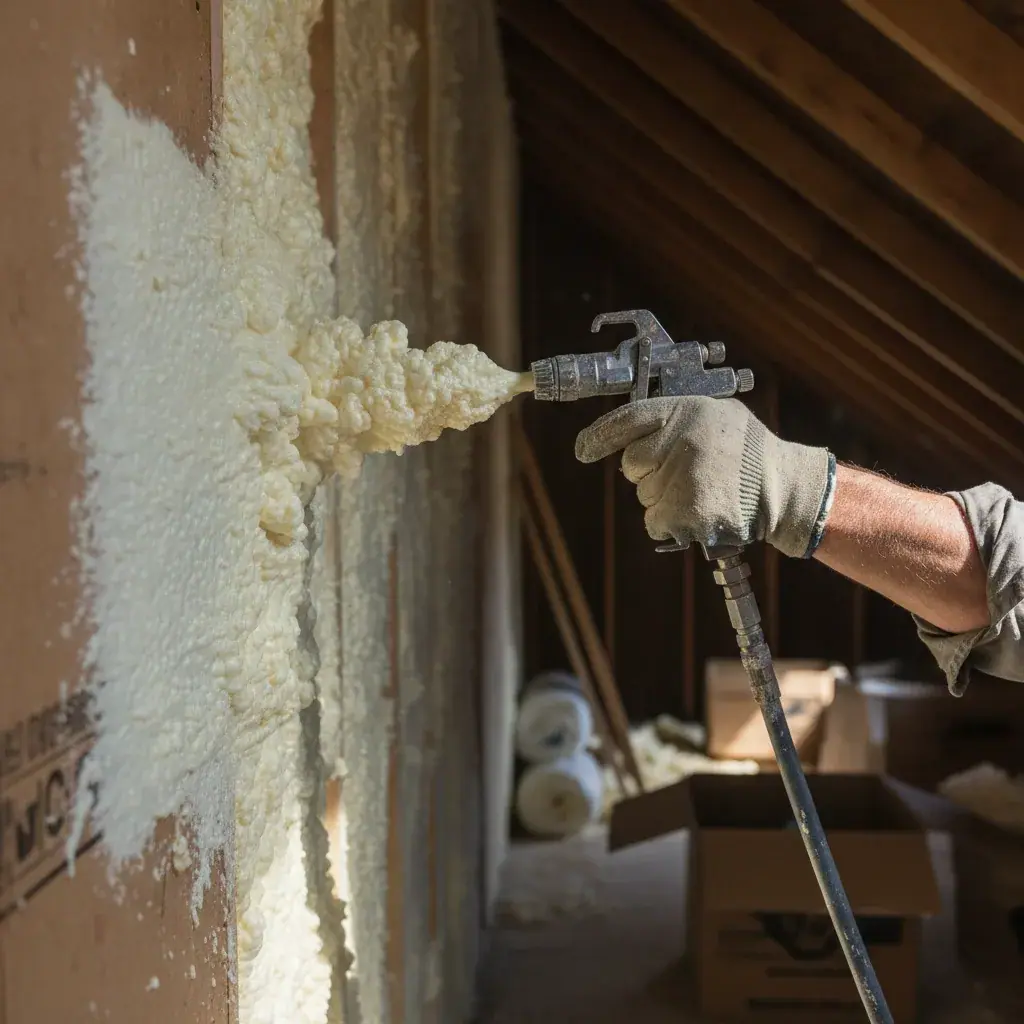
Rockwool insulation — also known as mineral wool or stone wool — is a premium insulation material manufactured from volcanic basalt rock and recycled slag. Spun into dense fibrous batts or boards, Rockwool delivers exceptional thermal performance, fire resistance, and acoustic dampening that ordinary fiberglass simply cannot match. For San Diego homeowners and business owners dealing with the region’s unique Mediterranean climate, coastal humidity, and wildfire exposure risk, Rockwool represents one of the smartest insulation investments available.
At Clean Air Attic Insulation, we specialize in professional Rockwool insulation installation across San Diego and its surrounding communities. Our team understands the specific building stock, climate patterns, and energy code requirements that define construction and renovation in this region. Whether you own a mid-century ranch home in La Mesa, a modern townhome in Otay Mesa West, or a commercial property in Chula Vista, our technicians bring location-tuned expertise to every project. Call us today at (858) 360-6973 to schedule your free assessment.
Understanding Rockwool Insulation
Rockwool insulation has a fascinating origin rooted in volcanic geology. Scientists first observed natural mineral wool fibers forming when Hawaiian lava flows were whipped by high winds — a phenomenon locals called “Pele’s hair.” By the early twentieth century, manufacturers had developed industrial processes to replicate this natural transformation, melting basalt rock and steel mill slag at temperatures exceeding 2,900°F, then spinning the molten material into interlocking fiber matrices. The result is a product with an R-value ranging from R-15 to R-30 per standard batt thickness, depending on configuration.
Modern Rockwool products, sold under brand names like ROCKWOOL (formerly Roxul) and Thermafiber, come in multiple formats including semi-rigid batts, rigid boards, loose-fill blown product, and pipe insulation. For residential applications the most common format is the friction-fit batt, available in thicknesses from 2 inches to 5.5 inches designed to fit standard 2×4 and 2×6 stud cavities without cutting or compression.
Read moreShow less
What distinguishes Rockwool from fiberglass and cellulose is its combination of characteristics. Its dense fiber structure allows it to resist airflow — achieving a natural air-sealing quality — while maintaining an R-value that does not degrade with temperature fluctuation the way some foam-based products can. Rockwool is also hydrophobic, meaning water beads off its surface rather than being absorbed, a critical advantage in coastal environments like San Diego where marine layer moisture is a near-daily occurrence from June through September.
In San Diego’s building landscape, Rockwool is particularly well-suited to the region’s eclectic housing stock. The county contains everything from 1920s craftsman bungalows in North Park to post-war tract homes in Spring Valley to recently constructed infill developments in Otay Mesa. Each building era presents different wall cavity dimensions, vapor barrier expectations, and energy code compliance requirements — all factors that influence which Rockwool product format is most appropriate.
California Title 24 energy efficiency standards require minimum R-13 in exterior walls and R-30 to R-38 in attic assemblies for most San Diego climate zone projects (Climate Zone 7 covers coastal areas; Climate Zone 10 covers inland communities). Rockwool batts meet or exceed these thresholds, making them a code-compliant choice across the county. Learn more about our attic insulation services
Why Rockwool Insulation Is Needed in San Diego, CA
The Marine Layer and Coastal Humidity
San Diego’s June Gloom phenomenon — the thick marine layer that blankets coastal neighborhoods like Coronado, Imperial Beach, and Nestor from late May through July — drives ambient relative humidity levels above 80% on many mornings. Standard fiberglass batts can absorb and retain moisture in these conditions, eventually losing thermal performance and promoting mold growth within wall cavities. Rockwool’s hydrophobic fiber coating repels this moisture at the structural level, maintaining full R-value performance even when surrounding building materials are damp. For homes within two miles of the Pacific coastline — a zone encompassing hundreds of thousands of San Diego residences — this moisture resistance is not a luxury feature; it is a structural necessity.
Wildfire Risk and Fire Resistance
San Diego County has experienced some of California’s most destructive wildfire events in recorded history. The Cedar Fire of October 2003 consumed over 273,000 acres and destroyed more than 2,200 structures across communities including Lakeside, El Cajon, and areas of Spring Valley. The October 2007 Witch Creek Fire burned nearly 200,000 acres and forced the evacuation of over 500,000 residents — one of the largest evacuations in California history. Communities in the eastern reaches of San Diego County, including Bonita and portions of La Mesa, remain in CAL FIRE-designated Very High Fire Hazard Severity Zones. Rockwool insulation is non-combustible and can withstand temperatures up to 2,150°F without melting or producing toxic gases. In wildfire-prone San Diego neighborhoods, this fire resistance adds a meaningful layer of protection to the building envelope.
Energy Cost Pressure in San Diego Gas & Electric Territory
San Diego Gas & Electric (SDG&E) consistently ranks among the highest-cost utilities in the continental United States. Residential electricity rates in SDG&E’s service territory regularly exceed $0.40 per kilowatt-hour during peak periods — roughly double the national average. Inadequate insulation forces HVAC systems to run longer cycles to compensate for thermal loss, directly inflating monthly energy bills. Studies conducted by the California Energy Commission have found that properly insulated homes in San Diego’s Climate Zone 7 can reduce cooling and heating energy consumption by 20% to 40% annually. For a typical San Diego household spending $2,400 or more per year on energy, that translates to $480–$960 in annual savings.
Older Building Stock with Degraded or Missing Insulation
A significant portion of San Diego’s residential housing was built before 1978, when California adopted its first mandatory energy efficiency standards. Neighborhoods like Lemon Grove, National City, and older sections of Chula Vista contain thousands of homes originally constructed with little to no wall insulation, or with degraded fiberglass batts that have settled and lost effectiveness over decades. For these homes, Rockwool installation — whether via retrofit batt replacement or blown-in mineral wool in wall cavities — represents the most impactful single upgrade available.
Acoustic Isolation in Dense Urban Areas
San Diego’s urban density, combined with its proximity to Naval Air Station North Island, Marine Corps Air Station Miramar, and several active freight rail corridors, makes exterior noise a significant quality-of-life issue. Rockwool’s dense fiber structure provides a Sound Transmission Class (STC) rating of up to 52 in standard wall assemblies — significantly higher than fiberglass batts at comparable thicknesses. For homeowners near Interstate 5, Interstate 805, or the Blue Line Trolley corridor through National City and Chula Vista, this acoustic performance is a concrete, daily benefit. Explore our spray foam insulation options for air sealing
Free, no-obligation estimates
Talk to Clean Air Attic Insulation
Tell us what you need and we’ll take it from there.
Signs You Need Rockwool Insulation in San Diego
Energy and Comfort Indicators
- Monthly SDG&E bills consistently higher than neighbors with similar-sized homes
- Rooms that feel noticeably warmer than the rest of the house during San Diego’s Santa Ana wind events, when inland temperatures can spike above 100°F
- HVAC system running continuously without reaching set thermostat temperature
- Cold exterior walls to the touch during winter mornings, even in San Diego’s mild winters
Moisture and Air Quality Warning Signs
- Visible condensation on interior wall surfaces during marine layer mornings in coastal neighborhoods
- Musty odors in walls, attic, or crawl space — particularly common after the region’s infrequent but intense atmospheric river rain events
- Increased allergy symptoms indoors, which can indicate compromised insulation allowing outdoor particulates to infiltrate the building envelope
Structural and Visual Indicators
- Visible gaps or compression in existing fiberglass batts during any attic or crawl space inspection
- Home built before 1978 with no record of insulation upgrade
- Drafts near electrical outlets or switch plates on exterior walls
- Evidence of pest activity in attic or crawl space — rodents and insects can shred fiberglass batts, requiring full replacement with more resistant Rockwool
If you recognize two or more of these signs, contact Clean Air Attic Insulation at (858) 360-6973 for a diagnostic assessment. Learn about our insulation removal and replacement services
Our process
Our Rockwool Insulation Installation Process in San Diego
- 01
Free In-Home Assessment (Day 1 — 1 to 2 Hours)
Our process begins with a thorough on-site evaluation. A Clean Air Attic Insulation technician visits your San Diego property to measure existing insulation R-values using a calibrated depth gauge, inspect for moisture intrusion common in coastal zip codes, id
- 02
Customized Project Proposal (1 to 2 Business Days)
Following the assessment, we deliver a detailed written proposal specifying the Rockwool product format selected, installation locations, projected R-value improvements, estimated energy savings based on your home’s square footage and SDG&E rate tier, and
- 03
Existing Insulation Removal if Required (Day of Installation — 2 to 4 Hours)
If degraded fiberglass, vermiculite, or pest-contaminated insulation is present, our team performs safe removal using HEPA-filtered vacuum equipment. This is particularly relevant in pre-1980 San Diego homes where asbestos-containing materials occasionally app
- 04
Air Sealing (Day of Installation — 1 to 3 Hours)
Before any Rockwool is placed, we seal penetrations, top plates, and rim joists using appropriate caulk or spray foam. This step is especially important in San Diego’s wood-frame construction, where gaps around plumbing and electrical penetrations create signi
- 05
Rockwool Installation (Day of Installation — 3 to 6 Hours Typical)
Our technicians install Rockwool batts by friction-fitting them into cavities without compressing the material — compression reduces R-value. For attic floors we install batts perpendicular to joists in double layers where needed to achieve R-38 targets. For w
- 06
Post-Installation Inspection and Documentation (30 Minutes)
We photograph all completed work, confirm coverage depth with a gauge reading, and provide you with documentation suitable for SDG&E rebate applications and future property sale disclosure.
- 07
Site Cleanup and Final Walkthrough (30 Minutes)
We remove all packaging material, HEPA-vacuum work areas, and walk you through completed work so you can visually confirm full installation coverage before we leave your San Diego home.
Rockwool Insulation Methods and Approaches
Friction-Fit Batt Installation
The most common Rockwool application involves semi-rigid batts pressed into open wall, floor, and rafter cavities. This method is ideal for new construction and gut-renovation projects across San Diego where wall cavities are fully exposed. Rockwool batts require no stapling or mechanical fastening — their density holds them securely in place without sagging, a known weakness of fiberglass in San Diego’s warm attic environments.
Blown-In Mineral Wool (Retrofit Application)
For existing walls without accessible cavities — common in the mid-century tract homes abundant in communities like Lemon Grove and Spring Valley — we can inject blown mineral wool through small-diameter holes drilled in exterior or interior walls, then patch and paint. This method achieves full cavity fill without major demolition.
Continuous Rigid Rockwool Board Insulation
For exterior continuous insulation applications — increasingly required by California energy code for commercial projects and advanced residential retrofits — rigid Rockwool boards provide thermal bridging elimination that cavity-only insulation cannot achieve. This method is particularly relevant for commercial properties in Otay Mesa’s industrial park corridors.
Crawl Space Mineral Wool Application
San Diego’s raised-foundation homes, prevalent in older neighborhoods, benefit from Rockwool batt installation between floor joists in crawl space assemblies. Rockwool’s resistance to the ground moisture common in San Diego’s coastal lowlands makes it far more durable than fiberglass in these below-grade-adjacent environments. Explore our crawl space insulation services
Combination System: Rockwool Plus Spray Foam Air Barrier
For maximum performance in high-exposure San Diego locations — homes in fire risk zones or extreme coastal humidity zones — we combine Rockwool’s thermal and fire performance with a thin layer of closed-cell spray foam as an air and vapor barrier, creating a hybrid assembly that outperforms either material used alone. Learn about our spray foam insulation services
Rockwool Insulation Cost in San Diego, CA
Understanding Rockwool insulation pricing in San Diego requires accounting for several location-specific variables that distinguish this market from national averages.
Typical Price Ranges
- Attic Rockwool insulation (new installation): $1.50–$2.50 per square foot, with a typical San Diego 1,500 sq ft attic running $2,250–$3,750 installed
- Wall cavity batt installation (open walls): $1.00–$1.75 per square foot of wall area
- Blown-in mineral wool wall retrofit: $3.00–$5.00 per square foot due to drilling and patching labor
- Crawl space floor insulation: $2.00–$3.50 per square foot installed
- Insulation removal and replacement (full attic): $2,500–$5,500 total depending on existing material type and attic complexity
Read moreShow less
San Diego-Specific Cost Factors
Labor costs in San Diego County run approximately 15–20% above national averages due to the region’s high cost of living. Material costs reflect Southern California distribution pricing, which is generally stable due to regional warehouse proximity. Homes in San Diego’s hillside neighborhoods — including portions of Bonita and Spring Valley — may incur access surcharges of $200–$500 for steep roof pitches or limited attic entry points.
Available Rebates and Incentives
SDG&E’s Energy Savings Assistance Program and California’s TECH Clean California initiative offer rebates ranging from $200 to $1,500 for qualifying insulation upgrades. Federal tax credits under the Inflation Reduction Act allow homeowners to claim 30% of insulation upgrade costs up to $1,200 annually. Our team provides documentation to support all applicable rebate applications. Call (858) 360-6973 for a detailed project estimate.
San Diego Neighborhoods We Serve
Chula Vista and Bonita
Chula Vista’s rapid development over the past three decades created significant variation in insulation quality — newer master-planned communities in eastern Chula Vista often have adequate insulation, while western Chula Vista’s older neighborhoods near the bayfront contain pre-1980 homes with inadequate or absent wall insulation. Bonita’s hillside properties face elevated wildfire exposure, making Rockwool’s fire resistance especially valuable.
National City and Lemon Grove
Both communities contain dense concentrations of pre-1960 housing stock, much of it never upgraded from original construction. Naval Base San Diego’s proximity creates aircraft and traffic noise challenges that Rockwool’s acoustic performance directly addresses.
Imperial Beach and Coronado
As San Diego’s most intensely coastal communities, Imperial Beach and Coronado face the highest marine layer humidity exposure in the county. Moisture-resistant Rockwool is the clear preferred choice over standard fiberglass in these zip codes.
La Mesa and Spring Valley
These inland communities sit in California Fire Hazard Severity Zones and experience greater temperature swings than coastal San Diego — often 20–30°F warmer on summer afternoons. Proper attic insulation delivers measurable comfort and cooling cost benefits here.
We also serve San Ysidro, Palm City, Otay Mesa, Egger Highlands, Otay Mesa West, Nestor, and La Presa. View all service areas
Rockwool Insulation Maintenance Tips for San Diego Homeowners
- Inspect attic insulation annually after atmospheric river events. San Diego receives the bulk of its annual rainfall during winter storm sequences. After significant rain, check for roof leak intrusion that could wet and compress insulation near eaves.
- Monitor crawl space moisture levels seasonally. San Diego’s wet season (November through March) can elevate ground moisture beneath raised foundations. Install a hygrometer in your crawl space and investigate readings above 60% relative humidity.
- Check attic ventilation after Santa Ana wind events. High-velocity offshore winds can dislodge soffit vent screens, allowing birds and rodents entry points that compromise insulation integrity.
- Keep attic access hatches properly weatherstripped. An unsealed attic hatch effectively creates an open hole in your thermal envelope, negating surrounding insulation.
- Do not store heavy items on attic insulation. Compression permanently reduces Rockwool’s R-value in affected areas.
- Schedule a professional inspection every 5 to 7 years. Even durable Rockwool benefits from periodic verification of coverage and air sealing condition.
- After any pest activity, request a full inspection. Rodent nesting within insulation creates compressed voids that require patching even with Rockwool’s pest-resistant material properties.
Why Choose Clean Air Attic Insulation for Rockwool in San Diego
Clean Air Attic Insulation brings specialized expertise in San Diego’s unique building environment to every Rockwool project we undertake. Our team has hands-on experience with the specific challenges posed by this region’s marine layer humidity, fire exposure zones, pre-1978 housing stock, and California Title 24 compliance requirements. We do not apply one-size-fits-all solutions — every project begins with a thorough assessment that accounts for your specific neighborhood’s climate exposure, your home’s construction era, and your energy cost profile within SDG&E’s rate structure.
We use only professional-grade Rockwool products and install them to manufacturer specifications, ensuring full R-value performance is achieved and maintained. Our documentation process supports SDG&E rebate applications and federal tax credit claims, helping you recover a meaningful portion of project costs.
Read moreShow less
We serve homeowners across the entire San Diego region — from Coronado and Imperial Beach on the coast to Spring Valley and Bonita inland — with the same commitment to thorough, high-quality installation. Contact us at (858) 360-6973 to discuss your project. Schedule your free insulation assessment today
FAQ
Frequently Asked Questions: Rockwool Insulation in San Diego, CA
How much does Rockwool insulation cost in San Diego?
Rockwool insulation installation in San Diego typically ranges from $1.50 to $2.50 per square foot for attic applications and $1.00 to $1.75 per square foot for open wall cavities. A full attic insulation project in an average San Diego home (1,200–1,800 sq ft attic floor) generally totals $2,000–$4,500 installed. San Diego labor costs run 15–20% above national averages, but available SDG&E rebates and federal tax credits can offset $200–$1,500 or more of total project cost depending on eligibility.
Is Rockwool better than fiberglass in San Diego’s coastal climate?
Yes, for most San Diego applications Rockwool outperforms fiberglass in several critical ways. Its hydrophobic fiber coating resists the moisture absorption that degrades fiberglass performance during San Diego’s prolonged marine layer season. Its non-combustible composition provides meaningful added protection in San Diego County’s wildfire-prone communities. And its denser fiber matrix provides superior acoustic performance for homes near San Diego’s busy transportation corridors.
How long does Rockwool insulation last?
Properly installed Rockwool has an effective service life of 50+ years in typical residential conditions. Unlike fiberglass batts, which can sag and separate from cavity walls over time — particularly in San Diego’s warm attic environments — Rockwool maintains its dimensional stability and R-value throughout its lifespan without settling or compacting under its own weight.
How long does a Rockwool installation take?
A standard San Diego attic insulation project — including any necessary removal of existing material and air sealing — is typically completed in one full day. Whole-house projects that include walls and crawl space may require two to three days. We schedule projects to minimize disruption and complete all work to a finished state before leaving your property each day.
Do San Diego homes need a vapor barrier with Rockwool insulation?
California’s Climate Zone 7 (coastal San Diego) and Zone 10 (inland communities) generally do not require vapor retarders in wall assemblies the way colder climates do. Rockwool’s inherent moisture resistance makes it particularly well-suited to San Diego’s mixed-humid climate without additional vapor barrier membranes in most applications. Our technicians confirm appropriate assembly design for your specific location and building configuration during the assessment phase.
Can Rockwool insulation help with noise from nearby roads or the trolley?
Absolutely. Rockwool provides a Sound Transmission Class (STC) rating of approximately 45–52 in standard wall assemblies — meaningfully higher than comparable fiberglass. For San Diego homeowners near the Blue Line Trolley corridor through National City and Chula Vista, Interstate 5, or Naval Air Station flight paths, Rockwool wall insulation delivers noticeable acoustic improvement that directly enhances daily quality of life.
Does Rockwool insulation help with San Diego wildfire protection?
Rockwool is non-combustible and rated to withstand temperatures up to 2,150°F. While no insulation material makes a home fireproof, Rockwool in wall and attic assemblies can slow fire spread and reduce structural ignition risk compared to combustible insulation alternatives. In San Diego County communities designated as Very High Fire Hazard Severity Zones — including portions of Spring Valley, Bonita, and eastern Chula Vista — this fire resistance characteristic provides meaningful added protection.
Are there rebates available for Rockwool insulation in San Diego?
Yes. SDG&E offers rebates through its Energy Savings Assistance Program and Residential Energy Efficiency programs. California’s TECH Clean California initiative provides additional incentives for qualifying projects. The federal Inflation Reduction Act provides a 25C tax credit of 30% of insulation upgrade costs, up to $1,200 per year. Clean Air Attic Insulation provides complete documentation to support all applicable rebate and tax credit applications. Call (858) 360-6973 to discuss your eligibility.
Get Your Free Rockwool Insulation Estimate in San Diego Today
Don’t let inadequate insulation drive up your SDG&E bills, expose your home to moisture damage during marine layer season, or leave your family’s comfort to chance during San Diego’s Santa Ana wind heat events. Clean Air Attic Insulation is ready to assess your property, recommend the right Rockwool solution for your specific neighborhood and building type, and deliver a professional installation that performs for decades.
Serving homeowners and businesses throughout San Diego, Chula Vista, National City, Coronado, Imperial Beach, La Mesa, Spring Valley, Bonita, Lemon Grove, San Ysidro, Otay Mesa, and all surrounding communities.
Call us now at (858) 360-6973 to schedule your free, no-obligation insulation assessment. Request your free estimate online
Get in touch
Find insulation help near you
Request a free estimate online or give us a call — our team will follow up quickly.
- Call us(858) 360-6973
- Visit10140 Marconi Dr, San Diego, CA 92154
- HoursMon-Sun 07:00-19:00