Mineral Wool Insulation in San Diego, CA
Energy-Saving Mineral Wool Insulation for San Diego, CA Homes — Licensed & Insured
Need mineral wool insulation in San Diego, CA? Clean Air Attic offers expert installation for attics, walls & crawl spaces. Call (858) 360-6973 for a free estimate.
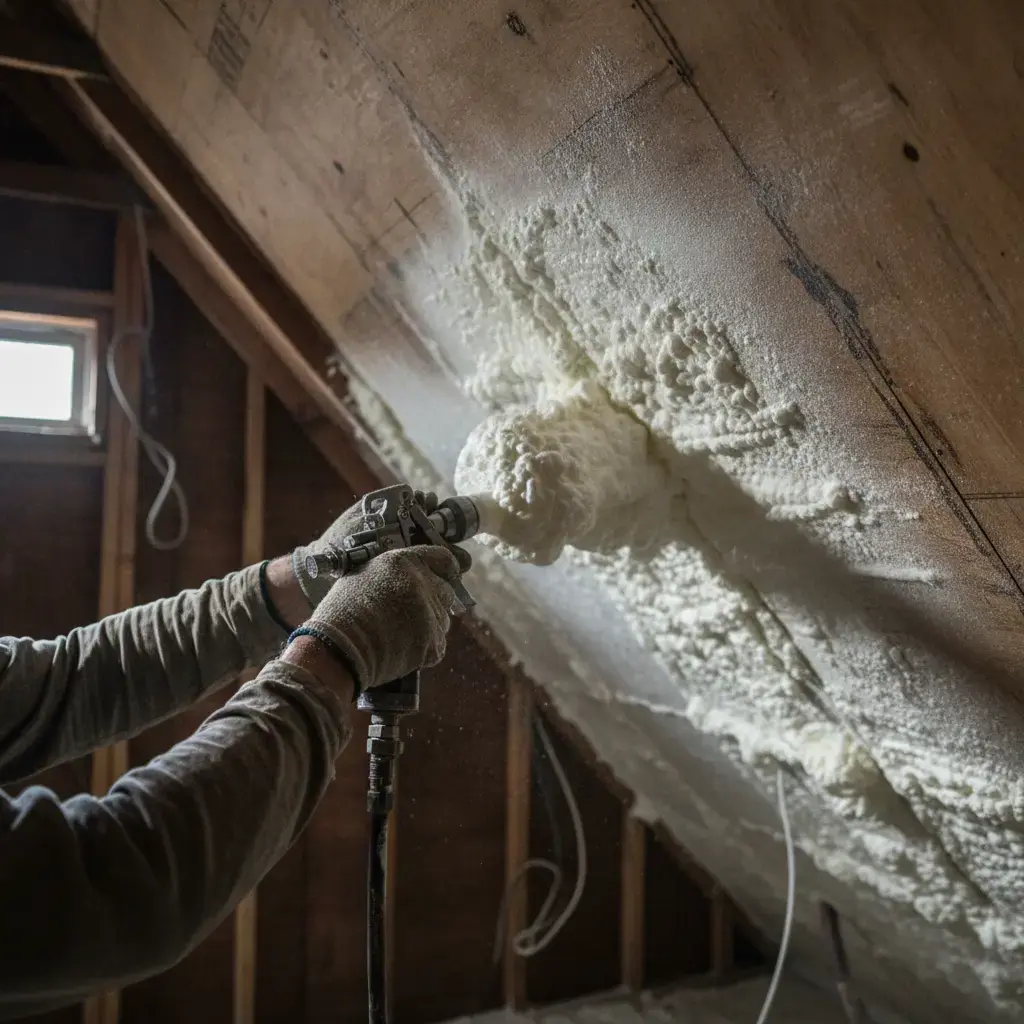
Mineral wool insulation — also known as rock wool or slag wool — is a high-performance, fire-resistant insulation material made from natural volcanic rock and recycled industrial slag. Unlike traditional fiberglass batts, mineral wool delivers superior thermal resistance, exceptional sound dampening, and outstanding moisture management, making it one of the most versatile insulation options available for San Diego homeowners and commercial property owners alike.
San Diego’s unique Mediterranean climate, characterized by marine layer mornings, dry Santa Ana wind events, and wildfire-adjacent communities stretching from Chula Vista to Spring Valley, creates specific insulation demands that mineral wool is uniquely equipped to handle. Its non-combustible composition can withstand temperatures exceeding 1,800°F — a critical safety feature in a region that has experienced some of California’s most destructive wildfire seasons.
Read moreShow less
At Clean Air Attic Insulation, our team brings deep local expertise to every mineral wool installation across San Diego County. Whether you’re upgrading an aging mid-century home in La Mesa or insulating a new build in Otay Mesa, we deliver precision-fit solutions backed by thorough diagnostics and professional craftsmanship. Call us today at (858) 360-6973 to schedule your free assessment.
Understanding Mineral Wool Insulation
Mineral wool insulation has been used in construction for over a century, with its origins tracing back to the late 1800s when engineers discovered that molten rock spun into fibers created a remarkably effective thermal barrier. Today, it is manufactured in two primary forms: rock wool, derived from basalt and other volcanic rock, and slag wool, made from the byproduct of steel production. Both types are spun into dense fibrous batts, boards, or loose-fill material that traps air and significantly slows heat transfer.
One of mineral wool’s defining characteristics is its density. Compared to standard fiberglass batts, mineral wool is roughly 25–50% denser, which translates into better resistance against air infiltration and convective heat movement within wall and attic cavities. It achieves an R-value of approximately R-3.0 to R-3.3 per inch for standard batts and up to R-4.2 per inch for high-density board products — performance metrics well-suited to meeting California’s Title 24 energy code requirements.
Read moreShow less
In San Diego’s housing market, mineral wool has gained particular traction in several building categories:
- Mid-century ranch homes (1950s–1970s): Common across La Mesa, Lemon Grove, and National City, these homes often feature thin wall cavities that benefit from mineral wool’s higher R-value per inch.
- Wildland-Urban Interface (WUI) properties: Homes in areas like Bonita and Spring Valley that sit near open brush land are increasingly being retrofitted with mineral wool due to its Class A fire rating and non-combustible nature.
- Multi-family and mixed-use structures: Mineral wool’s outstanding Sound Transmission Class (STC) ratings — ranging from 45 to 52 — make it the preferred choice for condominiums and apartment complexes throughout San Diego’s dense urban core.
- Crawl space and below-grade applications: Unlike fiberglass, mineral wool does not absorb moisture or lose R-value when exposed to humidity, making it an effective solution for San Diego’s coastal properties subject to marine air intrusion.
Its combination of thermal, acoustic, fire, and moisture performance places mineral wool in a distinct category among insulation materials — one that aligns closely with the diverse structural and environmental conditions found throughout San Diego County.
Why Mineral Wool Insulation Is Needed in San Diego, CA
The Marine Layer and Coastal Humidity Challenge
San Diego’s coastal communities — including Imperial Beach, Coronado, and Nestor — experience a persistent marine layer that rolls in from the Pacific Ocean, particularly between May and September, a phenomenon locals call “May Gray” and “June Gloom.” This marine layer introduces sustained humidity levels that regularly exceed 80–90% relative humidity in morning hours. Over time, conventional fiberglass batts can absorb this moisture, compressing and losing up to 40% of their effective R-value. Mineral wool, by contrast, is hydrophobic by nature — it repels water at the fiber level — maintaining consistent thermal performance even in persistently damp conditions.
Santa Ana Wind Events and Wildfire Risk
Between October and March, San Diego County is repeatedly exposed to Santa Ana wind events — hot, dry offshore winds that can drive temperatures above 100°F and reduce relative humidity to single digits in inland communities like Spring Valley, Bonita, and Otay Mesa. The 2007 Witch Fire, which burned over 197,000 acres and destroyed more than 1,000 homes in San Diego County, demonstrated catastrophically how quickly fire can spread to structures with combustible insulation materials. Building codes in California’s WUI zones have since tightened, and mineral wool’s ability to resist ignition and slow flame spread makes it one of the most defensible insulation choices for homes in these fire-adjacent neighborhoods.
Title 24 Compliance Pressure
California’s Title 24 Building Energy Efficiency Standards, updated most recently in the 2022 code cycle effective January 1, 2023, require climate zone-specific minimum R-values for attic, wall, and floor assemblies. San Diego falls primarily within Climate Zone 7 (coastal) and Climate Zone 10 (inland), with minimum attic insulation requirements of R-38 in most applications. Many homes built before 1990 in neighborhoods like La Presa and Egger Highlands fall far short of this standard. Mineral wool’s higher R-value per inch and reliable long-term performance make it an efficient path to compliance without requiring structural modification.
Temperature Differentials Between Coastal and Inland Zones
San Diego’s geography creates dramatic temperature swings across short distances. On a typical summer afternoon, Coronado may sit at 72°F while communities just 15 miles east in Spring Valley reach 95°F or higher. Homes in transitional zones — including Bonita and Chula Vista — experience both coastal humidity and inland heat in the same structure, depending on orientation and prevailing wind direction. This thermal variability demands insulation that performs reliably across a wide temperature range without degrading, a standard that mineral wool meets consistently.
Aging Housing Stock in South San Diego Communities
A significant portion of San Diego’s south county housing was constructed in the 1940s through 1960s for military families stationed near Naval Air Station North Island and Naval Base San Diego. Communities like National City, San Ysidro, and Palm City contain dense pockets of homes that were built with minimal or no wall insulation and only 2–3 inches of deteriorated attic insulation. These structures hemorrhage conditioned air, driving energy bills and reducing indoor comfort — conditions that a mineral wool retrofit can dramatically reverse.
Free, no-obligation estimates
Talk to Clean Air Attic Insulation
Tell us what you need and we’ll take it from there.
Signs You Need Mineral Wool Insulation in San Diego
Energy Performance Indicators
- Monthly SDG&E (San Diego Gas & Electric) bills that spike more than 30% during July–September heat events compared to spring baseline months
- HVAC system running continuously during Santa Ana conditions without reaching the thermostat set point
- Noticeable cold spots on interior walls in winter, particularly in north-facing rooms
Comfort and Air Quality Issues
- Persistent drafts near electrical outlets, light switches, or baseboards even with windows closed
- Rooms that are consistently 5–10°F warmer or cooler than adjacent rooms despite equal HVAC exposure
- Musty or damp odors emanating from attic or crawl space — a sign existing insulation has absorbed moisture from marine layer infiltration
- Visible sagging, discoloration, or compression of existing attic batts when viewed from the hatch
Structural and Age-Related Red Flags
- Home was built before 1980 with no record of insulation upgrades
- Presence of vermiculite or asbestos-containing insulation materials (common in pre-1980 San Diego military housing)
- Water stains on attic sheathing suggesting past roof leak events that may have compromised existing insulation
Noise and Fire Safety Concerns
- Clearly audible neighbor conversations, street traffic, or aircraft noise through walls (San Diego’s proximity to multiple military flight paths makes this a common complaint)
- Location within a designated WUI fire hazard zone in communities like Bonita or Spring Valley
Our process
Our Mineral Wool Insulation Installation Process in San Diego
- 01
Comprehensive On-Site Assessment (1–2 Hours)
Every project begins with a thorough inspection of your home’s current insulation condition. Our technicians use thermal imaging cameras and blower door diagnostics to identify air leakage points, measure existing R-values, and assess moisture levels in attic
- 02
Insulation Removal and Disposal (Half Day to Full Day)
If existing insulation is damaged, contaminated, or below code minimums, our team performs complete insulation removal using HEPA-filtered vacuum equipment. All removed material is bagged, sealed, and disposed of in compliance with San Diego County waste manag
- 03
Air Sealing and Cavity Preparation (2–4 Hours)
Before any new insulation is installed, we seal all attic bypasses — penetrations around plumbing stacks, electrical chases, recessed lighting, and top plates — using two-component spray foam or fire-rated caulk. This step alone can reduce air leakage by 20–35
- 04
Mineral Wool Installation (4–8 Hours Depending on Scope)
Our crew installs mineral wool batts or boards to the specified R-value, ensuring complete cavity fill without compression or gaps. For attic applications targeting Title 24 compliance in Climate Zone 7 or 10, this typically means achieving R-38 to R-49 throug
- 05
Vapor and Moisture Management (1–2 Hours)
In crawl space applications — particularly relevant for Bonita and National City homes on raised foundations — we pair mineral wool installation with appropriate vapor barriers and crawl space encapsulation protocols to prevent ground moisture from compromisin
- 06
Quality Verification and Documentation (1 Hour)
After installation, our project lead conducts a post-installation thermal scan and visual inspection to verify full coverage, correct R-value achievement, and proper clearance from recessed fixtures. We provide you with a written completion report documenting
- 07
Site Cleanup and Customer Walk-Through (30 Minutes)
We leave your property clean, removing all packaging and debris. Our project manager walks you through the completed work, explains maintenance recommendations, and answers any questions about performance expectations.
Mineral Wool Insulation Methods and Approaches
Batt and Roll Installation
The most common method for attic floor, wall cavity, and crawl space applications. Pre-cut mineral wool batts are sized to fit standard 16-inch and 24-inch on-center framing bays. This method is ideal for open attic spaces in San Diego’s mid-century ranch homes and works well in new construction framing before drywall is applied. Batts achieve R-15 in a 2×4 wall cavity and R-21 to R-23 in a 2×6 cavity — both meeting or exceeding California Title 24 requirements for Climate Zone 7.
Mineral Wool Board Insulation
Rigid mineral wool boards are used for continuous exterior insulation, under-slab applications, and commercial wall assemblies. In San Diego’s coastal commercial corridors — such as those in Chula Vista’s redevelopment zones — exterior rigid mineral wool boards are increasingly specified to meet Cal Green compliance requirements while also providing fire separation in mixed-use buildings.
Loose-Fill (Blown-In) Mineral Wool
For irregular attic geometries, finished walls with limited access, or attic spaces in older Craftsman and Spanish Revival homes common to La Mesa and Lemon Grove, blow-in insulation using granulated mineral wool can be an effective solution. This method ensures complete fill around obstructions like rafters, cross-bracing, and electrical conduits that make batt installation impractical.
Learn moreHybrid Spray Foam and Mineral Wool Systems
For maximum performance in WUI fire zones and coastal moisture-exposed properties, we often combine spray foam insulation air sealing at the attic deck or rim joist with mineral wool fill batts above. The spray foam creates an airtight, moisture-resistant substrate while the mineral wool adds thermal mass and fire resistance — a system increasingly popular in Spring Valley and Bonita new builds.
Mineral Wool Insulation Cost in San Diego, CA
Understanding the cost of mineral wool insulation in San Diego helps homeowners budget accurately and evaluate the return on investment. Mineral wool typically costs 20–40% more than standard fiberglass batts upfront but delivers measurably longer service life and superior performance — factors that offset the initial premium over time.
Typical Price Ranges
- Attic insulation (batt installation to R-38): $1.80–$2.80 per square foot installed, or approximately $2,700–$4,200 for an average 1,500 sq. ft. San Diego attic
- Wall cavity insulation (existing walls, batt method): $2.50–$3.50 per square foot installed
- Crawl space insulation: $3.00–$5.00 per square foot installed, depending on access difficulty and vapor barrier inclusion
- Exterior rigid board (commercial applications): $4.00–$7.50 per square foot installed, varying by board thickness and labor complexity
- Blown-in mineral wool (attic top-up): $1.50–$2.50 per square foot installed
Read moreShow less
Factors That Influence Mineral Wool Insulation Cost in San Diego
- Insulation removal: If old, degraded insulation must be removed first, expect to add $1.00–$1.50 per square foot for insulation removal and disposal
- Attic access and geometry: Homes with low-pitch rooflines — common in 1950s ranch-style homes in National City — require more labor-intensive installation
- Air sealing scope: Older homes with significant bypass penetrations may add $300–$800 to the project total for comprehensive air sealing
- Permit requirements: San Diego City building permits for insulation replacement range from $150–$400 depending on project scope
Available Rebates and Incentives
SDG&E’s Energy Upgrade California program offers rebates of $0.10–$0.25 per square foot for qualifying insulation upgrades in existing homes. Additionally, federal tax credits under the Inflation Reduction Act provide a 30% tax credit (up to $1,200) for qualifying energy efficiency improvements, including insulation. Our team can assist you in identifying applicable programs to reduce your net project cost.
Call us at (858) 360-6973 for a detailed, no-obligation quote specific to your property.
San Diego Neighborhoods We Serve
Chula Vista and Bonita
These neighboring communities feature a mix of 1960s–1980s tract homes and newer 2000s developments, many situated near open space preserves that place them within WUI fire hazard zones. Mineral wool’s fire-resistant properties make it a particularly smart investment for Bonita homeowners on brushy hillside lots.
National City and San Ysidro
Among San Diego’s oldest residential communities, homes here frequently date to the 1940s and 1950s with original construction techniques that included little to no wall insulation. We specialize in retrofitting these historic structures with mineral wool without disturbing original interior finishes.
La Mesa and Lemon Grove
These inland communities experience wider temperature swings than coastal San Diego — regularly hitting 90–95°F in summer — making attic insulation upgrades to R-38 or R-49 particularly impactful for energy savings. Many homes here feature older vermiculite or deteriorated fiberglass that requires full removal before new mineral wool installation.
Imperial Beach and Coronado
San Diego’s most coastal communities face the highest marine layer humidity exposure. Mineral wool’s hydrophobic fiber structure makes it the preferred choice over fiberglass in these salt-air environments, where moisture infiltration can quickly degrade lesser insulation materials.
We also serve Spring Valley, Otay Mesa, Otay Mesa West, Egger Highlands, Nestor, La Presa, and Palm City. View our full service area.
Mineral Wool Insulation Maintenance Tips for San Diego Homeowners
Mineral wool is a low-maintenance material by nature, but proactive attention ensures it delivers peak performance for decades. Here are eight location-specific maintenance recommendations:
- Inspect after Santa Ana wind events: High winds can dislodge roof ridge caps and create attic penetrations. Check attic access after major Santa Ana events each October–March season.
- Monitor for rodent activity annually: San Diego’s warm climate supports year-round rodent populations. Check attic insulation for tunneling or nesting, which can create voids that reduce effective R-value.
- Check crawl space vapor barrier integrity: Inspect the vapor barrier under crawl space mineral wool each spring, before the dry season begins, for punctures or displacement caused by pest activity.
- Clear attic ventilation pathways: Ensure soffit vents and ridge vents remain unobstructed to maintain proper attic airflow — essential for preventing summertime heat buildup in inland San Diego communities.
- Verify attic hatch sealing: The attic hatch is a frequent thermal bypass point. Confirm that insulated hatch covers remain sealed and that weatherstripping is intact each year.
- Review SDG&E energy bills seasonally: An unexpected spike in summer cooling costs can indicate insulation displacement or degradation worth investigating.
- Schedule a professional thermal scan every 5–7 years: Thermal imaging reveals developing cold spots or moisture accumulation invisible to the naked eye.
- Keep attic free of stored items that compress batts: Compressed mineral wool loses thermal resistance — maintain clear, unobstructed attic floor space around insulated areas.
Why Choose Clean Air Attic Insulation for Mineral Wool Insulation in San Diego
At Clean Air Attic Insulation, we’ve built our reputation on a single principle: delivering insulation solutions that are genuinely right for San Diego’s specific climate, housing stock, and regulatory environment — not generic, one-size-fits-all approaches.
Our technicians are trained specifically on California Title 24 compliance requirements for Climate Zones 7 and 10, ensuring that every mineral wool installation we complete meets or exceeds current code standards. We understand the nuances of San Diego’s coastal humidity, inland heat events, and wildfire risk in ways that matter for real-world insulation performance.
We bring expertise across the full spectrum of insulation services, including attic insulation, crawl space insulation, insulation replacement, and spray foam insulation — giving us the ability to recommend and deliver the optimal solution for your specific structure rather than defaulting to a single product.
Read moreShow less
Every project is backed by our commitment to clean, professional work — from detailed pre-installation diagnostics through final thermal verification. We assist clients in identifying available SDG&E rebates and federal tax credits to maximize the value of their investment.
Ready to experience the difference that local expertise makes? Call (858) 360-6973 today.
FAQ
Frequently Asked Questions: Mineral Wool Insulation in San Diego, CA
How much does mineral wool insulation cost in San Diego?
In San Diego, mineral wool insulation typically ranges from $1.80 to $2.80 per square foot for attic batt installations and $2.50 to $3.50 per square foot for wall cavity applications. A full attic insulation project in an average 1,500 sq. ft. San Diego home runs approximately $2,700–$4,200 before any applicable SDG&E rebates or federal tax credits. Final pricing depends on current R-value, access conditions, and whether insulation removal is required beforehand.
Is mineral wool insulation better than fiberglass for San Diego homes?
For most San Diego applications, yes. Mineral wool outperforms fiberglass in three key areas relevant to local conditions: moisture resistance (critical for coastal communities like Imperial Beach and Coronado), fire resistance (vital for WUI-adjacent properties in Bonita and Spring Valley), and sound attenuation (valued in urban areas near military flight paths and traffic corridors). Mineral wool also maintains its R-value more reliably over time in San Diego’s variable humidity conditions.
How long does a mineral wool insulation installation take in San Diego?
Most residential mineral wool insulation installations in San Diego are completed in one to two days. A straightforward attic insulation project — including air sealing and batt installation — typically takes four to eight hours. Projects that include insulation removal, crawl space work, or larger square footage may extend to a full two-day project. We provide a specific timeline estimate during your on-site assessment.
Does mineral wool insulation meet California’s Title 24 requirements?
Yes. Mineral wool batts and boards are fully compliant insulation materials under California’s Title 24 Building Energy Efficiency Standards. For San Diego’s Climate Zone 7 (coastal) and Climate Zone 10 (inland areas like Spring Valley and La Mesa), mineral wool can be installed to achieve the required R-38 minimum attic insulation standard and R-15 or R-21 wall cavity requirements through standard batt sizing — without requiring structural modifications.
Can mineral wool insulation help reduce noise in my San Diego home?
Absolutely. Mineral wool’s dense fiber structure gives it Sound Transmission Class (STC) ratings of 45–52, significantly higher than fiberglass batts in the same cavity. This makes it particularly effective for homes near Coronado’s Naval Air Station North Island flight path, homes adjacent to Interstate 5 or Interstate 805 in National City and Chula Vista, or any multi-family structure where inter-unit sound transmission is a concern.
Is mineral wool insulation safe for my family?
Modern mineral wool insulation products are classified as non-carcinogenic by the International Agency for Research on Cancer (IARC) and do not contain formaldehyde binders. Mineral wool is inorganic, meaning it does not support mold or bacterial growth — an important health consideration for San Diego’s coastal homes where moisture infiltration can cause biological growth in organic insulation materials like cellulose or early-generation fiberglass.
Do I need a permit for mineral wool insulation installation in San Diego?
In the City of San Diego and most San Diego County jurisdictions, insulation installation or replacement in existing homes may require a building permit, particularly when the work involves complete removal and replacement or significant scope. Our team is familiar with the permitting requirements across San Diego City, Chula Vista, La Mesa, National City, and other incorporated areas and can advise you on whether a permit is required for your specific project.
Can you install mineral wool insulation in my older San Diego home without major renovation?
In most cases, yes. For attic applications, we access the existing attic space through the standard hatch and install batts without disturbing living space finishes. For existing closed wall cavities, we use blown-in mineral wool injected through small-diameter access holes drilled from the exterior — a minimally invasive method that works well in the older wood-frame homes common throughout San Ysidro, Palm City, and National City.
Get a Free Mineral Wool Insulation Estimate in San Diego Today
If your San Diego home is losing conditioned air, struggling to manage temperature swings between marine layer mornings and inland heat afternoons, or sitting in a fire-risk zone without non-combustible insulation, mineral wool may be the most impactful upgrade you can make this year.
Clean Air Attic Insulation serves homeowners and property managers across San Diego County — from Coronado and Imperial Beach to Spring Valley, Chula Vista, and beyond. Our team is ready to conduct a thorough on-site assessment, provide a transparent itemized estimate, and help you navigate available SDG&E rebates and federal tax credit opportunities.
Call us now at (858) 360-6973 to schedule your free consultation. You can also contact us online to request a callback at your convenience. Don’t wait for the next Santa Ana season — insulate smart today.
Get in touch
Find insulation help near you
Request a free estimate online or give us a call — our team will follow up quickly.
- Call us(858) 360-6973
- Visit10140 Marconi Dr, San Diego, CA 92154
- HoursMon-Sun 07:00-19:00