Radiant barrier insulation is one of the most effective tools San Diego homeowners have for reducing attic heat. Clean Air Attic Insulation, an insulation company serving San Diego, CA and surrounding communities, installs it as part of a full range of energy efficiency and barrier solutions, and you can see the broader range of work on its Attic Insulation page. San Diego's climate delivers intense solar radiation for most of the year, making attic temperatures a real comfort and energy problem. This page explains exactly what radiant barriers are, how they work, what they cost, and how to decide whether one is right for your home.
What is radiant barrier insulation?
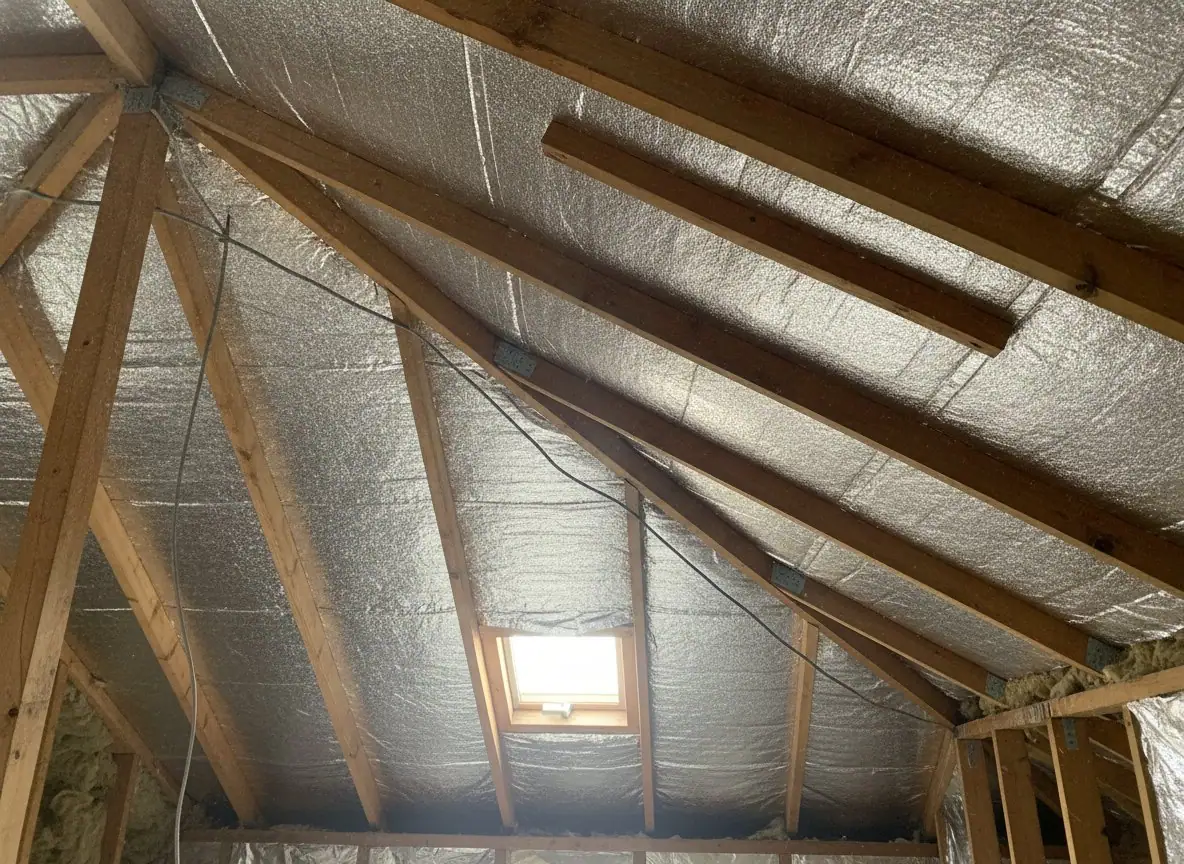
Radiant barrier insulation is a highly reflective material — most commonly thin aluminum foil — designed to reflect radiant heat rather than absorb it. Unlike fiberglass batts or blown-in cellulose, which slow heat by trapping air (conductive and convective resistance), a radiant barrier works by bouncing infrared energy back toward its source before that energy ever enters your living space.
Understanding the difference matters for homeowners making a purchasing decision:
- Radiant heat travels in waves, like sunlight. It moves through air without warming the air itself, heating whatever surface it strikes. A reflective surface deflects it.
- Conductive heat moves through solid material — through your roof deck, into the attic framing, and down through the ceiling. Mass insulation (fiberglass, foam, cellulose) resists this transfer by slowing the flow.
- The air gap rule: A radiant barrier only works when at least one side of the reflective surface faces an open air space. Without that gap, radiant heat has nowhere to reflect into, and the product performs no better than plain foil.
Because radiant barriers and mass insulation resist different types of heat transfer, they are most powerful when used together — which leads to the question of exactly how the barrier does its job.
How does a radiant barrier work?
A radiant barrier works by reflecting up to 97 percent of radiant heat that strikes its surface, depending on the product's emissivity rating and how clean the surface remains over time. The sun heats a roof deck to temperatures that can exceed 150°F on a San Diego summer afternoon. Without a barrier, that heat radiates down from the roof deck into the attic air and then into your ceiling. With a reflective foil stapled to the underside of the rafters — or draped across the attic floor joists — the radiant energy bounces back toward the roof deck instead of entering the attic cavity.
The air gap is not optional. The reflective surface must face an open air space. Foil pressed flat against insulation or wood conducts heat rather than reflecting it, eliminating the product's main advantage. In rafter-mounted installations, the natural gap between the foil and the roof deck provides that air space. On the attic floor, the foil sits above the existing insulation with air between them.
Read moreShow less
Dust accumulation on the foil surface does reduce reflectivity over time, which is why installation position and product choice (perforated vs. solid) affect long-term performance — a distinction covered in the product types section below. First, it helps to understand whether the technology actually delivers results in real attics.
Free, no-obligation estimates
Talk to Clean Air Attic Insulation
Tell us what you need and we’ll take it from there.
Do radiant barriers work in attics?
Yes, radiant barriers work in attics — particularly in hot, sunny climates like San Diego's — though their benefit depends on attic conditions and existing insulation levels. Research from the U.S. Department of Energy shows measurable reductions in attic heat gain when radiant barriers are properly installed. Homes with ductwork running through the attic see some of the largest gains, because cooler attic air means air conditioning ducts lose less conditioned air to heat before it reaches living spaces.
Two conditions reduce the return on a radiant barrier:
- Heavy existing insulation. When an attic already has R-38 or higher of mass insulation, a radiant barrier adds diminishing incremental benefit. The existing insulation already slows most conductive transfer; there is less heat reaching the living space for the barrier to prevent.
- Climate with significant heating seasons. In climates with cold winters, a radiant barrier on the attic floor can reflect heat back into the attic instead of letting it warm the house — a drawback that matters less in San Diego's mild winters but is worth noting for homeowners near the inland areas of the service territory.
Read moreShow less
Real-world results vary. Some San Diego homeowners report dramatic cooling relief — rooms that were previously uncomfortable become livable without changing the HVAC system. Others in already well-insulated homes see more modest energy savings. An attic inspection helps predict which outcome applies to your specific house, which starts with recognizing the signs that your attic needs help.
Signs your San Diego attic could use a radiant barrier
San Diego's coastal zone rarely sees extreme cold, but its solar intensity is high year-round, and inland neighborhoods in areas like Spring Valley, La Mesa, and Chula Vista routinely hit triple-digit roof-surface temperatures in summer. The following signs suggest your attic is absorbing and transferring more heat than it should:
- Upper-floor rooms stay noticeably hotter than the rest of the house, even with air conditioning running
- Your HVAC system runs for extended cycles during warm months without reaching the set temperature
- The attic has little or no existing insulation, or existing insulation is below R-30
- HVAC ducts run through the attic and are not fully sealed or insulated
- The attic has adequate ventilation but the air inside is still extremely hot to the touch on the framing
- Energy bills spike significantly from April through October
Read moreShow less
San Diego's housing stock includes many homes built in the 1950s through 1980s with minimal original insulation and dark roofing materials that absorb rather than reflect solar energy. Homes in Otay Mesa, National City, and Bonita often share these characteristics. Knowing whether a barrier is the right answer also depends on where in the attic it should go.
Where should a radiant barrier be installed?
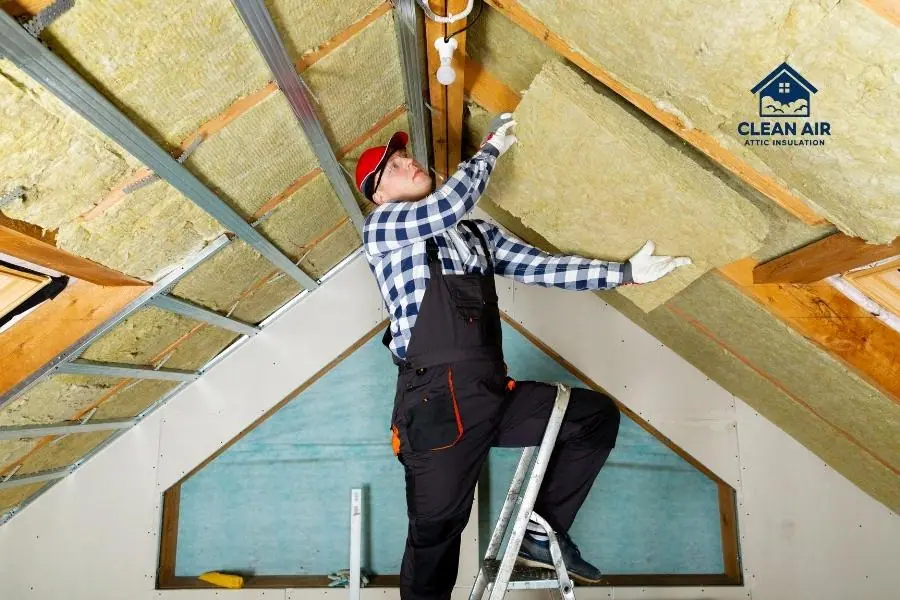
A radiant barrier should be installed wherever the largest radiant heat source faces an open air space — in most San Diego homes, that means the underside of the roof rafters in the attic. Two primary installation positions exist:
- Rafter-mounted (roof deck underside): Foil is stapled to the underside of the rafters, leaving an air gap between the foil and the roof deck above. This is the most common and most effective position. The barrier intercepts heat at its source before it radiates into the attic cavity. Dust accumulation is minimal in this position because the reflective face points downward.
- Attic floor: Foil is draped over the top of existing attic insulation. This position is easier to install but accumulates dust on the upward-facing reflective surface over time, reducing long-term performance. It also blocks moisture vapor movement unless a perforated product is used.
Read moreShow less
Garages with living space above, flat roofs common in older Chula Vista and Coronado architecture, and crawl spaces under raised-floor homes can also benefit from reflective insulation in specific applications. The right position depends on your roof type, existing insulation depth, and ventilation — all factors we assess during a free attic inspection. Choosing the right position is easier once you understand the product options available.
At a glance
What types of radiant barrier and reflective insulation are there?
Several distinct reflective insulation products are available, and they are not interchangeable. Each suits different applications and budgets.
| Product Type | Description | Best Use | Key Limitation |
|---|---|---|---|
| Solid foil (single or double reflective) | One or two layers of aluminum foil, sometimes with a thin scrim or kraft backing. High reflectivity. | Rafter-mounted attic installation; vapor barrier where moisture control is needed | Blocks moisture vapor entirely — can trap humidity if used on attic floor without adequate ventilation |
| Perforated foil | Same reflective foil with small holes that allow moisture vapor to pass through | Attic floor installations or any location where vapor drive is a concern | Slightly lower vapor resistance; reflectivity is essentially the same as solid foil |
| Bubble foil / reflective bubble insulation (e.g., Reflectix) | One or two layers of foil bonded to bubble polyethylene core. Thicker and more rigid than plain foil. | Crawl spaces, ducts, pipes, garages, tight spaces where some physical cushioning helps | The bubble layer adds minimal R-value (typically R-1 to R-1.3 for the core alone without air gaps). Marketing often overstates thermal performance as mass insulation. |
| Foil-faced insulation (foil-backed / foil-faced boards or batts) | Rigid foam or fiberglass batt with a foil facing bonded to one side | Walls, rooflines, basement or crawl space walls where both mass R-value and reflectivity are desired | The foil facing only acts as a radiant barrier when it faces an air space; it adds to the product's total R-value but does not replace a dedicated barrier |
A practical decision rule: if your attic has less than R-19 of existing insulation and significant duct runs, plain foil stapled to the rafters combined with blown-in insulation on the floor typically delivers the best combined result. If you are insulating a garage, crawl space duct, or rim joist, bubble foil or foil-faced rigid board may be the more practical choice. Understanding where radiant barriers overlap with — and differ from — other insulation types clarifies which solution to prioritize.
At a glance
Which is better, spray foam or radiant barrier?
Spray foam and radiant barriers solve different problems, so the better choice depends on what your attic actually lacks, and the wider range of roof insulation options shows what else can be paired with them. The table below compares the three most common attic insulation strategies:
| Solution | What it resists | Best use case | Key limitation |
|---|---|---|---|
| Radiant barrier (reflective foil) | Radiant heat from the sun-heated roof deck | Hot, sunny climates; attics with ductwork; homes with low existing insulation | Does not add R-value; does not slow conductive or convective heat on its own |
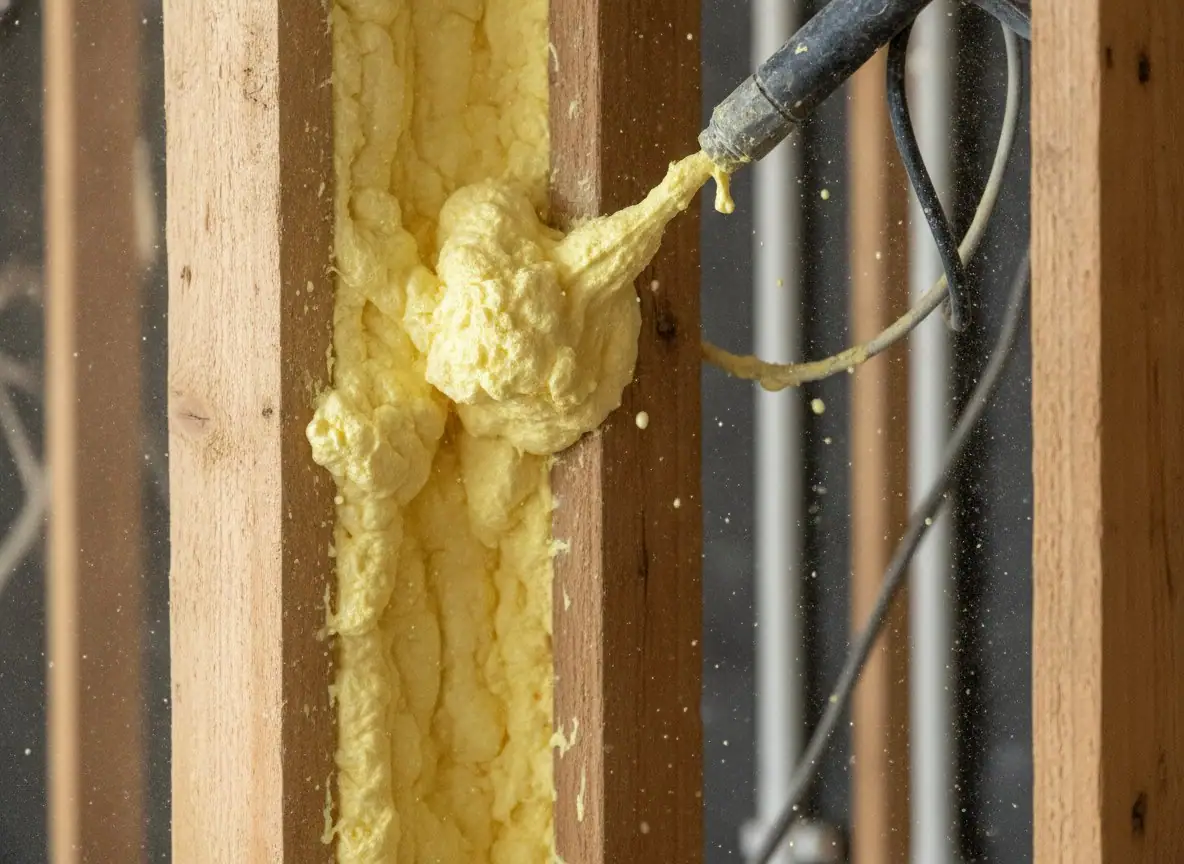
| Spray foam insulation | Conductive and convective heat; air infiltration | Sealed (unvented) attics; homes where ducts should be inside conditioned space; air sealing priority | Higher cost per sq ft; not removable; moisture management requires careful detailing |
| Blown-in insulation (fiberglass or cellulose) | Conductive heat transfer through the ceiling plane | Vented attics with existing floor joists; cost-effective R-value increase | Does not reflect radiant heat; settling over time can reduce R-value |
Many San Diego homes benefit most from a combination: a radiant barrier on the rafters to reflect solar gain, plus blown-in insulation on the attic floor to slow conductive transfer. Spray foam becomes the stronger choice when air sealing is the primary need or when converting to an unvented attic assembly. We assess your specific attic during the free inspection and recommend the combination that fits your home's construction and your energy goals, drawing on all of our insulation services. Before committing, it is worth knowing the genuine limitations of radiant barriers.
What are the disadvantages of using a radiant barrier?
Radiant barriers have real limitations that every homeowner should weigh before installation. Knowing them upfront prevents disappointment and helps set realistic expectations.
- No R-value on its own. Plain foil has essentially zero mass insulation value. It must be paired with adequate mass insulation to resist conductive heat. A radiant barrier alone will not meet California's Title 24 insulation requirements for new construction or permitted additions.
- Diminishing returns in heavily insulated attics. If your attic already has R-38 or more of blown-in or batt insulation, the incremental benefit of adding a radiant barrier is smaller. The mass insulation is already doing most of the work.
- Dust accumulation reduces performance. An upward-facing reflective surface (attic floor installation) collects dust over years, reducing reflectivity. Rafter-mounted installations face downward and are less prone to this problem.
- Moisture management requires care. Solid foil is a vapor barrier. Installed on the attic floor of a vented attic without adequate ventilation, it can trap moisture and promote mold or wood rot. Perforated foil reduces this risk.
- Overstated claims for bubble products. Bubble foil products (sometimes called Reflectix or double bubble insulation) are frequently marketed with R-values that assume large surrounding air gaps. Without those specific air gaps, actual thermal performance is much lower than advertised. They work well in specific applications — duct wrap, crawl space pipes — but are not a substitute for attic mass insulation.
- Not effective in all climates. San Diego's warm, sunny climate is well-suited to radiant barriers. Homeowners in cooler, overcast climates see less benefit because solar radiant gain is lower to begin with.
Read moreShow less
None of these disadvantages make a radiant barrier the wrong choice for most San Diego attics — they simply mean it should be matched to the right application, which is exactly what a professional attic assessment determines. That assessment also informs the cost of the project.

At a glance
How much does radiant barrier installation cost in San Diego?
Radiant barrier installation cost in San Diego varies based on several project-specific factors. We do not publish flat rates because a price that reflects your attic accurately requires a free on-site inspection. The following factors drive the final written quote:
| Cost Factor | Why it affects price |
|---|---|
| Attic square footage | More area requires more material and labor time |
| Attic access and pitch | Low-pitch or tight attics increase labor difficulty; multiple access points add time |
| Product type selected | Solid foil, perforated foil, bubble foil, and foil-faced board have different material costs |
| Installation position | Rafter-mounted installation (stapling to underside of roof deck) is more labor-intensive than attic-floor draping |
| Existing insulation condition | Damaged, contaminated, or inadequate existing insulation may need removal or supplementation before the barrier is installed |
| Duct sealing or additional work | Combining a radiant barrier with duct sealing or blown-in top-up adds scope and cost — but often improves the overall return |
| Rodent damage or contamination | Rodent-proofing or attic remediation required before installation adds to project cost |
Financing is available for qualifying projects. We also help homeowners navigate insurance claims where attic damage is involved. Contact us to schedule your free inspection — we provide a written estimate with no obligation before any work begins. Choosing the right company to perform this work is as important as the product itself.
How do you choose a radiant barrier installer in San Diego?
The right radiant barrier installer in San Diego will assess your attic before recommending a product, not after, which is the approach Clean Air Attic Insulation in San Diego takes with its free attic inspections. Here is what to look for and what to ask:
- Free attic inspection before any quote. A reputable installer walks the attic, measures existing insulation depth, checks duct condition, and identifies moisture or pest issues before recommending a product or position. Any quote given over the phone without an inspection is guesswork.
- Clear explanation of product limitations. An honest installer tells you when a radiant barrier will not move the needle much — for example, in an attic that already has R-38 blown-in insulation and no ductwork. Be cautious of anyone who oversells reflective products as a complete insulation solution.
- Written, itemized estimate. The estimate should specify the product type, installation position, square footage covered, and what happens if existing insulation needs to be addressed first.
- Knowledge of California Title 24 and local requirements. San Diego is subject to California's energy code. A knowledgeable installer understands where radiant barriers fit within those requirements and when permits apply.
- Comprehensive service capability. Attic problems rarely come alone. An installer who also handles blown-in insulation, air sealing, rodent-proofing, and duct insulation, which keeps conditioned air from losing heat or cooling in the attic, can address the full picture in one visit rather than requiring multiple contractors.
Read moreShow less
Clean Air Attic Insulation, serving San Diego, CA and communities including Chula Vista, La Mesa, Bonita, National City, Lemon Grove, Spring Valley, Coronado, Imperial Beach, Nestor, Otay Mesa, San Ysidro, and surrounding areas, provides free attic inspections with written estimates and no-pressure recommendations. Our trained technicians assess what your attic actually needs — including whether a radiant barrier, additional blown-in insulation, spray foam, or a combination is the right fit — and explain the reasoning clearly before any work begins.
We offer 24/7 emergency service and can assist homeowners with insurance claims where attic damage is involved.
Want to see the results? Browse before-and-after photos of our San Diego attic insulation projects in our gallery, and ask us to share examples when you book your free inspection.
Ready to find out how much heat your attic is adding to your energy bills? Call Clean Air Attic Insulation at (858) 360-6973 or use our free inspection request form to schedule your no-cost attic assessment today.
FAQ
FAQ
What is the disadvantage of foil insulation?
Foil insulation on its own adds no meaningful R-value against conductive heat. It only works when at least one reflective surface faces an open air gap, and its performance drops as dust accumulates on upward-facing surfaces. Solid foil also acts as a vapor barrier, which can trap moisture in poorly ventilated attics. For these reasons, foil insulation works best as one part of a broader insulation strategy rather than as a standalone solution.
Is Reflectix the same as a radiant barrier?
Reflectix is a brand of bubble foil insulation — a reflective bubble insulation product consisting of foil layers bonded to a polyethylene bubble core. It acts as a radiant barrier in the sense that its foil faces reflect radiant heat. However, it is not equivalent to a plain radiant barrier foil. Reflectix and similar double bubble insulation products are often marketed with R-values that only apply when specific air gaps exist on both sides. Without those air gaps, the bubble core adds very little thermal resistance. Reflectix is well-suited for wrapping ducts, pipes, and use in crawl spaces — it is not a substitute for attic mass insulation or a rafter-mounted radiant barrier foil.
Can a radiant barrier be installed over existing attic insulation?
Yes, perforated radiant barrier foil can be draped across the top of existing attic insulation on the attic floor. The foil should not be pressed flat against the insulation — a small air space between the foil and the insulation surface improves performance. Perforated foil is preferable in this position because it allows moisture vapor to pass through, reducing the risk of condensation building up under the foil. Solid foil in this position can trap moisture and cause damage to insulation and framing over time.
Do radiant barriers cause moisture problems?
Solid foil radiant barriers can cause moisture problems if installed incorrectly. Because solid foil is a vapor barrier, it blocks moisture movement. In a vented attic where moisture vapor needs to escape upward, solid foil on the attic floor can cause humidity to accumulate beneath it. The solution is to use perforated foil for attic floor installations, ensure adequate attic ventilation before installation, and have the attic inspected for pre-existing moisture issues. Rafter-mounted installations are less prone to moisture problems because the foil faces downward and attic ventilation operates normally above and around it.
Is bubble foil insulation worth it in a San Diego garage?
Bubble foil insulation can be a practical choice for a San Diego garage, particularly for insulating the garage door, walls shared with living space, and duct runs passing through the garage. San Diego's sunny climate means garages without insulation absorb significant radiant heat, and reflective bubble insulation is easy to cut and fit in those applications. The important caveat: do not expect bubble foil to perform like fiberglass batts or rigid foam boards for overall thermal resistance. Use it where its flexibility and reflective surface suit the specific application, and pair it with mass insulation where more R-value is needed.
Can I install attic foil myself?
DIY installation of radiant barrier foil is possible in accessible attics with straightforward rafter geometry. Rolls of foil are available at home improvement stores, and the basic process — stapling foil to rafter undersides with a consistent air gap to the roof deck — is not highly technical. However, several risks exist: improperly placed foil can trap moisture; foil stapled across ventilation paths can restrict airflow and cause roof damage; and working in a hot San Diego attic carries real heat-exposure risk. A professional inspection before installation helps identify these hazards. If the attic has ductwork, rodent contamination, inadequate ventilation, or existing insulation that needs to be addressed first, professional installation is strongly recommended.
Why choose us
Why choose Clean Air Attic Insulation?
Free estimates
Get a clear, no-obligation estimate before any work begins.
Licensed & insured
Your property and our crew are protected on every project.
Residential & commercial
One team for homes, multi-family and commercial properties.
Locally owned & operated
A local team serving your community and the surrounding area.
Get in touch
Find insulation help near you
Request a free estimate online or give us a call — our team will follow up quickly.
- Call us(858) 360-6973
- Visit10140 Marconi Dr, San Diego, CA 92154
- HoursMon-Sun 07:00-19:00